
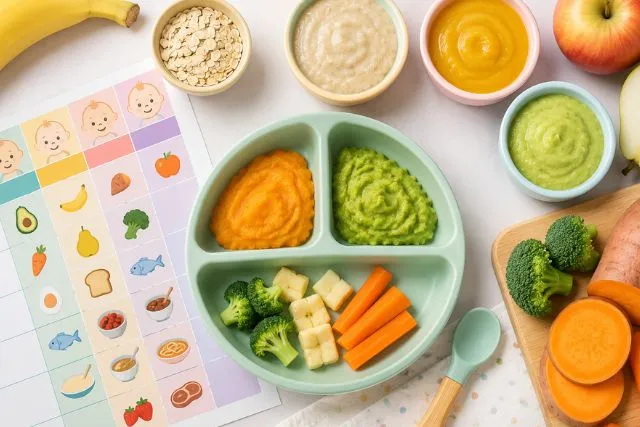
Starting solid foods is an exciting stage in your baby’s first year. A baby food chart can help you understand what foods to offer, how often to feed your baby, and how their diet changes between 6 and 12 months.
While breast milk or formula remains an important source of nutrition throughout the first year, babies gradually move from milk-only feeding to eating a wide variety of foods. This guide provides a practical baby feeding chart, age-based meal ideas, and feeding schedules designed for UK parents.
Baby Food Chart by Age (6–12 Months)
| Baby’s Age | Milk Feeds | Meals Per Day | Suitable Foods | Texture |
|---|---|---|---|---|
| 6 Months | Breast milk or formula remains the main source of nutrition | 1–2 meals | Mashed avocado, sweet potato, banana, porridge, apple puree, pear puree | Smooth purees, mashed foods, soft finger foods |
| 7–8 Months | Continue regular milk feeds | 2–3 meals | Soft vegetables, lentils, beans, scrambled egg, toast fingers, soft fruits | Mashed, thicker textures, soft lumps |
| 9–10 Months | Milk feeds continue alongside solids | 3 meals | Pasta, rice, fish, chicken, vegetables, yoghurt, fruit pieces | Chopped, minced, soft finger foods |
| 10–12 Months | Around 3–4 milk feeds daily | 3 meals + 1–2 snacks | Family meals, eggs, meat, fish, vegetables, fruit, dairy products | Finger foods and modified family foods |
| 12 Months | Whole cow’s milk can be introduced as a main drink | 3 meals + 2 snacks | A wide variety of healthy family foods | Family food textures |
Important: Every baby develops at their own pace. Continue offering breast milk or infant formula throughout the first year while gradually increasing the variety and quantity of solid foods.
Recommended Portion Guide by Age
| Age | Typical Portion Size |
|---|---|
| 6 Months | 1–2 tablespoons, gradually increasing |
| 7–8 Months | 2–4 tablespoons per food group |
| 9–10 Months | 4–6 tablespoons per meal |
| 10–12 Months | Small child-sized portions, based on appetite |
Baby Food Chart: Feeding Progression from 6 to 12 Months
6 Months: First Foods
Most babies are ready to start solids at around six months. Parents can choose spoon-fed purees, baby-led weaning, or a combination of both approaches.
- Mashed avocado
- Sweet potato mash
- Broccoli florets
- Steamed carrot sticks
- Pear puree
- Apple puree
- Porridge oats
- Soft ripe banana
Breast milk or formula should still provide most of your baby’s nutrition at this stage.
7–9 Months: Moving On
As babies become more confident eaters, they can manage thicker textures, soft lumps, and a wider variety of foods.
- Porridge with fruit
- Soft-cooked vegetables
- Lentils and beans
- Soft pasta shapes
- Scrambled egg
- Flaked fish
- Toast fingers
- Soft fruit pieces
Many babies will be eating three meals per day by the end of this stage, alongside milk feeds.
10–12 Months: Family Meals
By this stage, most babies can enjoy modified family meals and are developing self-feeding skills.
- Unsalted pasta dishes
- Soft-cooked vegetables
- Rice dishes
- Scrambled eggs
- Soft meat strips
- Fish cakes
- Fruit pieces
- Yoghurt
According to UNICEF, babies can gradually eat a greater variety of foods while continuing breastfeeding if desired.
Sample Infant Feeding Schedule
- Breakfast: Porridge with fruit.
- Morning Snack: Soft fruit.
- Lunch: Vegetables, potatoes, and protein food.
- Afternoon Snack: Yoghurt or fruit.
- Dinner: Modified family meal.
Breast milk or formula can continue between meals throughout the first year.
Introducing Allergens Safely
Current infant feeding guidance encourages introducing common allergen foods from around six months while continuing regular feeding.
- Cooked egg
- Peanut products, such as smooth peanut butter, mixed into food
- Fish
- Dairy products
- Wheat-containing foods
Once introduced and tolerated, these foods should remain part of your baby’s regular diet where possible.
Important Nutrients for Babies
- Iron for brain development.
- Protein for growth.
- Healthy fats for energy.
- Calcium for bones and teeth.
- Vitamins and minerals from fruits and vegetables.
According to Danone’s infant nutrition guidance, iron-rich foods become increasingly important after six months as babies’ nutritional requirements grow.
Foods to Avoid Before Age One
- Honey due to the risk of infant botulism.
- Added salt.
- Added sugar.
- Fizzy drinks.
- Highly processed snacks.
- Whole nuts due to choking risk.
Can Babies Have Cow’s Milk?
Whole cow’s milk should not be used as a baby’s main drink before 12 months of age. However, it can be used in cooking from around six months, such as in porridge, sauces, or mashed foods.
Baby Food Stages Explained
- Stage 1: Smooth purees and simple foods.
- Stage 2: Thicker textures and food combinations.
- Stage 3: Soft lumps and mashed foods.
- Stage 4: Finger foods and modified family meals.
Tips for Building a Healthy Baby Meal Plan
- Offer a variety of foods.
- Let babies explore different textures.
- Follow hunger and fullness cues.
- Introduce iron-rich foods regularly.
- Avoid adding salt or sugar.
- Make mealtimes relaxed and enjoyable.
If you are using formula alongside solids, read our formula feeding guide for newborns and infants.
Milk feeding remains important throughout the first year. Parents who are breastfeeding can also benefit from our breastfeeding tips for new mums.
As feeding skills develop, babies also reach important growth milestones. Learn more in our guide to baby development milestones by month.
Frequently Asked Questions
How many meals should a 6-month-old have?
Most babies begin with one or two small meals daily while continuing breast milk or formula feeds.
Can babies start with finger foods?
Yes. Many babies can begin baby-led weaning from six months with appropriately prepared soft finger foods.
Can a 12-month-old eat family meals?
Yes. Most one-year-olds can eat modified family meals with suitable textures and portion sizes.
Is breast milk still important after solids begin?
Yes. Breast milk or formula remains an important source of nutrition throughout the first year.
Final Thoughts
A baby food chart can help parents introduce solids confidently while ensuring babies receive the nutrients they need for healthy growth and development. By gradually increasing food variety, introducing iron-rich foods, and continuing breast milk or formula feeds, you can build healthy eating habits throughout your baby’s first year.
Disclaimer
This article is for informational purposes only and does not replace professional medical advice. Every baby develops differently, and feeding needs may vary. Always consult your GP, health visitor, or paediatrician before making significant changes to your baby’s diet or feeding routine.
