


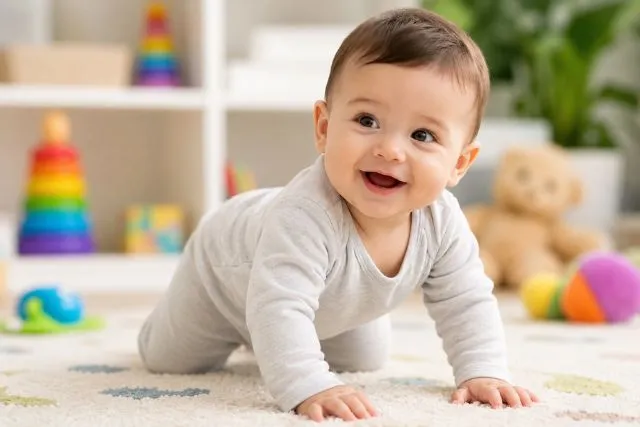
Watching your baby grow is full of exciting milestones, and crawling is one of the biggest. If you’re wondering about the signs your baby is ready to crawl, you’re not alone. Most babies begin showing early signs between 6 and 10 months, although every child develops at their own pace. Before crawling, babies usually build strength through tummy time, rolling over, sitting independently, and supporting their weight on their hands and knees.
Recognising these early milestones can help you encourage your baby’s development while avoiding unnecessary comparisons with other children. In this guide, you’ll discover the most common signs your baby is ready to crawl, learn when babies typically start crawling, understand why crawling matters for healthy development, and find simple ways to support your little one’s next big milestone.
When Do Babies Start Crawling?
Most babies start crawling between 6 and 10 months of age, although some begin a little earlier and others take a bit longer. The exact timing depends on your baby’s muscle strength, opportunities for floor play, personality, and overall development.
Before crawling, babies gradually master several important physical skills. They learn to hold their head steady, roll over in both directions, sit without support, and push themselves up during tummy time. These milestones prepare their muscles and coordination for crawling.
Here’s a general developmental timeline:
| Age | Common Milestones |
|---|---|
| 0–3 months | Lifts head during tummy time |
| 3–5 months | Rolls from tummy to back and back again |
| 5–7 months | Sits independently and reaches for toys |
| 6–10 months | Shows the first signs your baby is ready to crawl, including rocking and scooting |
| 9–12 months | Crawls confidently, pulls to stand, and begins cruising |
Remember that these ages are only a guide. Every baby develops differently, and slight variations are perfectly normal.
Can Babies Skip Crawling?
Yes. Some healthy babies never crawl in the traditional hands-and-knees position. Instead, they may bottom shuffle, roll across the floor, army crawl, or move directly towards standing and walking.
Skipping crawling isn’t necessarily a cause for concern if your baby continues meeting other developmental milestones. However, if you have concerns about your baby’s movement or overall development, check the NHS guidance on sitting to crawling or speak with your GP or health visitor for personalised advice.
Why Crawling Is an Important Developmental Milestone
Crawling isn’t just about getting from one place to another. It helps babies develop the strength, coordination, and confidence they’ll need for many future milestones.
1. Builds Strength for Future Movement
One of the earliest signs your baby is ready to crawl is increasing muscle strength. Crawling requires babies to use their neck, shoulders, arms, hands, tummy muscles, hips, and legs together.
Each attempt at pushing forward strengthens these muscles, laying the foundation for standing, climbing, and eventually walking.
2. Improves Balance and Coordination
During crawling, babies move opposite sides of their body together—for example, the right hand moves forward while the left knee follows.
This cross-body movement improves:
- Balance
- Coordination
- Body awareness
- Motor planning
- Bilateral movement
These skills continue supporting everyday activities throughout childhood, from climbing stairs to riding a bicycle.
3. Supports Healthy Brain Development
As babies crawl, their brains process information from multiple senses at once. They learn how to judge distance, avoid obstacles, reach objects, and coordinate what they see with how they move. This type of hands-on exploration is a key part of early learning and aligns with Piaget’s Theory of Cognitive Development, which explains how babies develop knowledge by interacting with their environment during the sensorimotor stage.
This constant problem-solving helps strengthen the connection between the brain and body while encouraging curiosity, independent learning, and healthy cognitive development.
4. Encourages Exploration and Confidence
Once babies become mobile, a whole new world opens up to them. They can choose which toys to investigate, crawl towards family members, and explore different textures and environments.
This independence helps build confidence while encouraging active learning through play.
5. Helps Develop Fine and Gross Motor Skills
The signs your baby is ready to crawl often appear alongside improvements in both fine and gross motor development. Reaching for toys, supporting body weight, and shifting from sitting to hands and knees all require greater control of large muscle groups, while grasping objects and adjusting hand placement strengthen fine motor skills.
Together, these abilities prepare babies for later milestones such as pulling to stand, walking, self-feeding, and eventually writing.
Every Baby Develops at Their Own Pace
It’s natural to compare your baby with friends, siblings, or children on social media, but development isn’t a race. Some babies crawl at six months, while others may not crawl until closer to ten months. A few healthy babies even skip crawling altogether.
Instead of focusing on age alone, pay attention to the signs your baby is ready to crawl and celebrate each new skill they achieve. Rolling over, sitting independently, rocking on hands and knees, or eagerly reaching for a favourite toy are all positive indicators that your baby’s strength and coordination are developing as expected.
With plenty of supervised floor play, tummy time, and encouragement, most babies gradually gain the confidence they need to take their first crawling adventures.
10 Signs Your Baby Is Ready to Crawl
Every baby reaches developmental milestones at their own pace, but there are several common physical and behavioural changes that suggest crawling may be just around the corner. If you’ve been wondering about the signs your baby is ready to crawl, look for these milestones rather than focusing on age alone.
Remember, your baby doesn’t need to show every sign before crawling. Some children display only a few of these behaviours before taking off across the floor.
1. Your Baby Has Strong Head and Neck Control
One of the earliest signs your baby is ready to crawl is having good control over their head and neck. By the time babies are preparing to crawl, they can comfortably lift and hold their head upright during tummy time without becoming tired quickly.
Strong head and neck muscles are essential because crawling requires babies to look ahead while supporting their body weight on their arms and knees. Without this strength, coordinated movement becomes much more difficult.
What you might notice
- Holds their head steady when sitting.
- Looks around confidently during tummy time.
- Turns their head easily to follow people or toys.
- Keeps their head raised while reaching for objects.
Parent tip: Encourage supervised tummy time every day. Even a few short sessions can strengthen the muscles needed for crawling.
2. They Roll Over Easily in Both Directions
Rolling from tummy to back and back again is another important milestone that often comes before crawling. Once babies learn to roll confidently, they begin discovering different ways to move and explore their surroundings.
Rolling helps strengthen the shoulders, hips, and core muscles that crawling depends on. It also teaches babies how to shift their body weight, an important skill they’ll use when moving onto their hands and knees.
Signs to look for
- Rolls without needing assistance.
- Changes position to reach a favourite toy.
- Uses rolling as a way to move around the room.
- Appears comfortable moving from side to side.
If your baby enjoys rolling frequently, it’s one of the encouraging signs your baby is ready to crawl.
3. Tummy Time Has Become Easier and More Enjoyable
Many babies dislike tummy time at first, but as their muscles become stronger, they often begin to enjoy it. Spending time on their tummy helps build the upper-body strength needed for crawling.
During tummy time, babies learn to push up using their forearms and eventually straighten their arms completely. These movements strengthen the shoulders, wrists, chest, and back.
Your baby may
- Push their chest high off the floor.
- Stay on their tummy for longer periods.
- Reach for nearby toys.
- Pivot in a circle while lying on their tummy.
The more comfortable your baby becomes during tummy time, the closer they may be to crawling.
4. They Sit Without Support
Independent sitting is one of the biggest developmental milestones before crawling. When babies can sit steadily without someone holding them, they’ve developed stronger core muscles and better balance.
Sitting also gives babies a new perspective of the world around them. From this position, they can lean forward, twist their body, and eventually transition onto their hands and knees.
Common signs include
- Sits for several minutes independently.
- Reaches for toys without falling over.
- Uses both hands freely while sitting.
- Easily moves between sitting and tummy time.
For many babies, sitting confidently is one of the clearest signs your baby is ready to crawl.
5. They Push Up Onto Their Hands and Knees
This is perhaps the most recognisable pre-crawling milestone.
Instead of lying flat on their tummy, your baby begins lifting themselves onto both hands and knees. At first, they may simply hold this position for a few seconds before collapsing back down.
Over time, they’ll become stronger and more stable.
You might notice
- Pushing onto hands and knees repeatedly.
- Looking around while balancing.
- Shifting weight from one side to the other.
- Practising the crawling position without moving forward.
Many babies spend several weeks mastering this stage before taking their first crawl.
6. Your Baby Rocks Back and Forth
One day you’ll probably notice your baby on all fours gently rocking forwards and backwards.
Although it may look like they’re playing, this movement is actually an important way of practising balance and coordination. Rocking strengthens the shoulders, hips, and core while helping babies understand how to shift their weight.
This behaviour often includes
- Gentle rocking while on hands and knees.
- Smiling or laughing during the movement.
- Repeating the action several times each day.
- Occasionally lunging forward accidentally.
This rocking stage is one of the strongest signs your baby is ready to crawl, and many babies begin crawling within days or weeks of practising it.
7. They Reach for Toys That Are Just Out of Reach
Motivation plays a huge role in learning to crawl.
As babies become more curious, they’ll start reaching for toys, pets, siblings, or family members that are slightly beyond their reach. This desire to explore often encourages their first attempts at moving independently.
Your baby may
- Stretch their arms towards favourite toys.
- Lean forward from a sitting position.
- Become frustrated when unable to reach something.
- Experiment with different ways of moving closer.
A simple toy placed just a short distance away can provide plenty of motivation while encouraging safe movement.
8. They May Move Backwards Before Moving Forwards
Many parents worry when their baby starts moving backwards instead of forwards.
The good news is that this is completely normal.
Before babies learn to coordinate forward movement, they often push themselves backwards because their arm muscles are stronger than their leg coordination.
You might see
- Sliding backwards across the floor.
- Turning in circles.
- Moving sideways.
- Accidentally pushing away from a toy.
Although it may seem unusual, backward movement is often one of the unexpected signs your baby is ready to crawl.
9. They Can Bear Weight on Their Legs
As your baby’s muscles continue developing, they’ll begin supporting more of their own weight.
You may notice them pushing down through their legs while you’re holding them upright or bouncing happily when supported.
This growing strength helps prepare them not only for crawling but also for standing and walking later on.
Healthy signs include
- Standing briefly with support.
- Pushing against the floor with both feet.
- Bending and straightening their legs.
- Enjoying supported bouncing.
While this milestone alone doesn’t mean crawling will happen immediately, it shows that your baby’s lower-body strength is developing well.
10. Your Baby Wants to Explore Everything
Perhaps the biggest sign your baby is ready to crawl isn’t physical at all—it’s curiosity.
As babies grow, they become increasingly interested in exploring the world around them. They may try to follow you across the room, reach for everyday household objects, or chase after siblings and pets.
This natural curiosity often becomes the motivation that turns practice into successful crawling.
Your baby might
- Follow you with their eyes around the room.
- Attempt to move towards interesting objects.
- Become excited by new environments.
- Constantly look for something new to investigate.
Once curiosity meets growing strength and coordination, many babies begin crawling sooner than parents expect.
How to Encourage Your Baby to Crawl Safely
Once you start noticing the signs your baby is ready to crawl, you may wonder whether there’s anything you can do to help. The good news is that babies naturally develop this skill with time, but creating the right environment can encourage them to practise safely and confidently.
Make Tummy Time Part of Your Daily Routine
Tummy time is one of the best ways to prepare your baby for crawling. It strengthens the neck, shoulders, arms, back, and core muscles needed for movement.
Aim for several short tummy time sessions throughout the day rather than one long session. Place colourful toys or a baby-safe mirror nearby to keep your little one engaged.
Place Toys Just Out of Reach
A simple way to encourage movement is by placing a favourite toy slightly beyond your baby’s reach.
This motivates your baby to stretch, pivot, roll, or eventually move forward without causing frustration. As they become stronger, gradually increase the distance while ensuring it’s still achievable.
Create a Safe Floor Space
Babies learn best when they have plenty of room to move.
Use a clean play mat or carpeted area and remove anything that could become a hazard, including:
- Small objects that could cause choking
- Sharp furniture edges
- Loose electrical cords
- Unstable furniture
A safe environment allows your baby to explore with confidence.
Limit Time in Baby Equipment
While baby swings, bouncers, and activity centres can be useful in moderation, spending too much time in them may reduce opportunities for floor play.
Giving your baby plenty of supervised time on the floor allows them to practise the movements that eventually lead to crawling.
Celebrate Every Small Achievement
Learning to crawl doesn’t happen overnight. Every roll, reach, rock, and scoot is progress.
Smile, clap, encourage, and praise your baby’s efforts without putting pressure on them to reach milestones by a certain age.
Common Mistakes Parents Should Avoid
Supporting your baby’s development is important, but it’s equally important to avoid habits that may unintentionally slow their progress or create unnecessary stress.
Comparing Your Baby with Others
One of the biggest mistakes parents make is comparing milestones with friends, siblings, or social media.
Every child develops at their own pace. Instead of comparing ages, focus on the signs your baby is ready to crawl and celebrate the progress they’re making.
Trying to Force Crawling
Some parents try positioning their baby’s arms and legs repeatedly in a crawling position.
While occasional guidance is fine, babies learn best through natural movement and exploration rather than being forced into a particular position.
Skipping Tummy Time
Regular tummy time builds the strength babies need before they crawl.
If your baby dislikes tummy time, start with just a few minutes several times a day and gradually increase the duration as they become more comfortable.
Expecting Crawling to Look the Same for Every Baby
Not all babies crawl on their hands and knees.
Some may:
- Army crawl
- Bottom shuffle
- Bear crawl
- Roll across the floor
- Move sideways before crawling forwards
These variations are often completely normal.
What If My Baby Isn’t Crawling Yet?
Many parents worry if their baby hasn’t started crawling by a certain age.
The truth is that development varies considerably. While many babies crawl between 6 and 10 months, some healthy babies don’t crawl until later, and others skip crawling entirely before walking.
Instead of focusing only on whether your baby is crawling, consider their overall development.
Ask yourself:
- Are they becoming stronger each week?
- Can they roll over?
- Do they sit independently?
- Are they interested in moving and exploring?
- Are they meeting other developmental milestones?
If the answer is yes, your baby is likely progressing well.
When Should You Speak to a Paediatrician?
Although variation is normal, it’s a good idea to seek professional advice if your baby:
- Shows little interest in moving by around 10–12 months.
- Cannot sit independently by the expected developmental stage.
- Has difficulty supporting their weight on their arms or legs.
- Uses only one side of their body consistently.
- Appears unusually stiff or floppy.
- Loses skills they previously had.
Remember that these signs don’t automatically indicate a developmental problem. A paediatrician or health visitor can assess your baby’s progress and provide personalised guidance if needed.
Frequently Asked Questions
What are the first signs your baby is ready to crawl?
The earliest signs your baby is ready to crawl include strong head control, rolling over confidently, enjoying tummy time, sitting without support, and pushing up onto their hands and knees.
At what age do babies usually start crawling?
Most babies begin crawling between 6 and 10 months, although some start a little earlier or later. Every baby’s developmental timeline is unique.
Can a baby skip crawling completely?
Yes. Some healthy babies skip traditional crawling and move directly to pulling themselves up, cruising along furniture, or walking. As long as they’re meeting other developmental milestones, this is often perfectly normal.
Is crawling backwards normal?
Absolutely. Many babies move backwards before they learn to crawl forwards because their arm muscles develop faster than their coordination.
Does tummy time help babies crawl?
Yes. Tummy time strengthens the neck, shoulders, back, arms, and core muscles that babies need for crawling and later physical milestones.
Should I use a baby walker to encourage crawling?
Most experts recommend allowing babies plenty of supervised floor time instead of relying on baby walkers. Floor play gives babies the opportunity to develop the balance, coordination, and strength needed for crawling naturally.
Final Thoughts
Recognising the signs your baby is ready to crawl can help you support this exciting stage with confidence rather than worry. Every baby follows their own developmental journey, and there isn’t a single “right” age or way to start crawling.
Instead of comparing milestones with other children, focus on your baby’s progress. Rolling over, sitting independently, rocking on hands and knees, reaching for toys, and showing curiosity are all encouraging steps towards independent movement.
By providing regular tummy time, a safe space to explore, and plenty of encouragement, you’re giving your little one the opportunity to develop important physical and cognitive skills at their own pace.
If you ever have concerns about your baby’s movement or overall development, don’t hesitate to speak with your GP, health visitor, or paediatrician. Early reassurance—or early support when needed—can give you peace of mind and ensure your baby continues to thrive.
Disclaimer
The information in this article is for educational purposes only and should not replace professional medical advice. Always consult your GP or health visitor if you have concerns about your child’s development.