


Puzzles have been a favorite activity for kids for generations. They are not just a great way to pass the time but also help improve problem-solving skills, hand-eye coordination, and logical thinking. From classic jigsaw puzzles to exciting digital challenges, there are many types of puzzles for kids to explore. Whether your child enjoys working with their hands, solving tricky riddles, or using technology, there’s a perfect puzzle for everyone. Let’s take a look at the different types of puzzles that can keep kids entertained while sharpening their minds.
1. Inset Puzzles: The First Step to Problem-Solving
Inset puzzles are perfect for toddlers and younger children just starting their puzzle journey. These puzzles involve placing pieces into the correct slots on a board.
- Knob Puzzles: Pieces come with easy-to-grip knobs, making them perfect for small hands.
- Chunky Puzzles: Thick, sturdy pieces that can also be used as play figures.
- Peg Puzzles: These require more precision, helping kids develop fine motor skills.
These puzzles help children recognize shapes, colors, and everyday objects while improving hand-eye coordination.
2. Jigsaw Puzzles: A Timeless Classic


Jigsaw puzzles are a great way to improve problem-solving skills and patience. Kids put together small pieces to form a bigger picture, enhancing their ability to recognize patterns and fit pieces correctly.
- Frame Puzzles: Provide a border to guide younger kids.
- Floor Puzzles: Large, easy-to-handle pieces that encourage teamwork.
- 3D Puzzles: Bring an extra challenge by adding depth and dimension to the fun.
Completing a jigsaw puzzle gives kids a sense of accomplishment and boosts their concentration.
3. Magnetic Puzzles: Perfect for On-the-Go Fun
Magnetic puzzles are a great way to keep kids entertained while traveling. These puzzles use magnetic pieces that stick to a board, making them easy to carry and play with anywhere.
- Travel-friendly: Pieces don’t get lost easily.
- Multiple themes: Kids can explore numbers, letters, animals, and more.
- Great for solo or group play: Encourages kids to work together.
These puzzles enhance problem-solving skills without the worry of losing pieces.
4. Crossword Puzzles: Boosting Language Skills

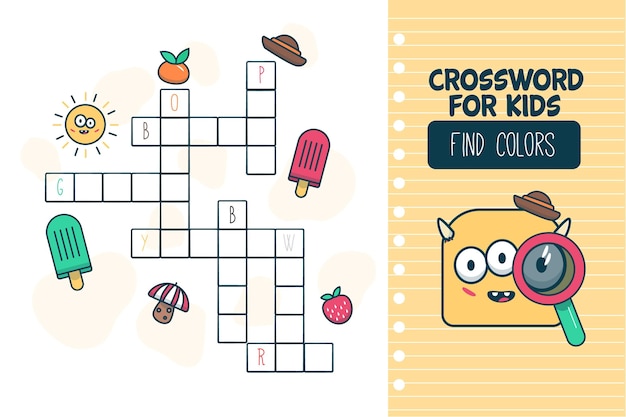
Crossword puzzles are fantastic for improving vocabulary, spelling, and problem-solving skills. Scholastic notes that puzzle books and brain games reinforce classroom learning by helping kids think critically and strengthen word recognition.
- Improves reading skills by encouraging kids to think critically.
- Encourages creativity by making kids think about different meanings of words.
- It can be themed around different subjects like animals, science, or geography.
Crossword puzzles are a great way to make learning fun and engaging for children.
Read also: Burrito Craft Game: Craft the Perfect Burrito
5. Sudoku: Strengthening Logical Thinking


Sudoku puzzles involve placing numbers in a grid without repeating them in rows, columns, or blocks. While it may sound tricky, there are easy versions designed just for kids!
- Improves logical thinking by encouraging kids to analyze patterns.
- Builds patience as kids work towards the right answer.
- Helps with number recognition and early math skills.
Sudoku is a great way to develop reasoning skills and a love for numbers.
6. Word Search Puzzles: A Fun Way to Learn Words


Word search puzzles challenge kids to find hidden words in a grid. These puzzles are great for improving spelling and focus.
- Helps with word recognition by familiarizing kids with new vocabulary.
- Encourages pattern spotting by helping kids see letter combinations.
- It can be customized with different difficulty levels.
Kids love the thrill of spotting words and racing against the clock to find them all!
7. Maze Puzzles: A Journey to Problem-Solving
Maze puzzles require kids to find a path from a starting point to an endpoint. These puzzles teach kids to plan ahead and think strategically.
- Improves hand-eye coordination by tracing paths.
- Encourages problem-solving skills by forcing kids to navigate obstacles.
- Boosts patience and persistence as they work through dead ends and find the right way.
Mazes come in different levels of difficulty, making them perfect for all ages.
8. Logic Puzzles: Encouraging Critical Thinking
Logic puzzles challenge kids to use reasoning and deduction to solve problems. These puzzles are great for older children who enjoy thinking outside the box.
- Enhances critical thinking by requiring kids to analyze different possibilities.
- Encourages creativity through unique and fun scenarios.
- Builds perseverance by teaching kids to keep trying until they find a solution.
Logic puzzles can be found in books, apps, or interactive games that make problem-solving exciting.
9. Digital Puzzles: Learning Through Technology
With the rise of technology, digital puzzles are becoming a popular way for kids to engage in learning while having fun.
- Educational apps provide interactive puzzles that adapt to a child’s skill level.
- Online puzzle platforms offer a variety of challenges in subjects like math, science, and language.
- Virtual jigsaw puzzles give kids access to endless puzzle-solving opportunities.
These puzzles are a great way to mix education with screen time in a productive way.
10. Tangrams: A Fun Shape Challenge
Tangrams are ancient Chinese puzzles that challenge kids to create specific shapes using seven geometric pieces.
- Enhances spatial awareness by helping kids visualize how shapes fit together.
- Improves problem-solving skills as kids figure out different ways to form a shape.
- Encourages creativity by allowing kids to create their designs.
Tangrams provide an engaging way for kids to explore geometry while having fun.
Conclusion
Puzzles are more than just fun activities; they help kids develop essential skills like problem-solving, logical thinking, and patience. From classic jigsaw puzzles to exciting digital games, there is something for every child to enjoy. The different types of puzzles for kids ensure they stay entertained while learning valuable skills. Whether at home, in school, or on the go, puzzles continue to be a great tool for growth and development.
Read also: Mastering Retro Bowl Unblocked Games 76: The Ultimate Strategy Guide
FAQ
Q1: What age should kids start doing puzzles?
A: Kids can start with simple inset puzzles as early as 12-18 months old. As they grow, they can move on to jigsaw puzzles, mazes, and more complex challenges.
Q2: How do puzzles help a child’s development?
A: Puzzles improve problem-solving skills, hand-eye coordination, patience, memory, and logical thinking. They also enhance creativity and language skills.
Q3: Are digital puzzles as beneficial as physical ones?
A: Yes! Digital puzzles can be interactive and educational. However, a mix of physical and digital puzzles is best for overall development.
Q4: What types of puzzles are best for toddlers?
A: Inset puzzles, chunky puzzles, and knob puzzles are ideal for toddlers. These puzzles help with shape recognition and fine motor skills.
Q5: Can puzzles help with school subjects?
A: Absolutely! Crossword and word searches help with language skills, Sudoku improves math skills, and logic puzzles develop critical thinking.