
Feeding a baby during the first year can feel overwhelming for many parents. Babies grow rapidly during this stage, and their nutritional needs change frequently. In the beginning, newborns rely entirely on breast milk or infant formula. As babies grow, they slowly transition to solid foods and begin learning how to eat different textures and flavours.
This complete baby feeding guide explains what to feed, when to feed, and how much to feed a baby from birth to 12 months. It includes a newborn feeding schedule, baby feeding chart by age, baby food chart for the first year, and important feeding tips. The goal is to help parents create a simple feeding routine that supports healthy growth and development throughout the baby’s first year.
Understanding Baby Nutrition During the First Year
The first year of a baby’s life is one of the most important periods for growth and development. Babies grow faster during this time than at any other stage of life. Proper nutrition supports brain development, immune strength, and healthy weight gain.
For the first six months, babies get all the nutrients they need from breast milk or infant formula. According to World Health Organization, exclusive breastfeeding for the first six months supports optimal growth and protects babies from infections and illnesses.
After six months, babies begin eating complementary foods while continuing to drink breast milk or formula. This stage helps babies learn chewing, swallowing, and self-feeding skills.
Why Milk Is the Main Food in the First Six Months
Breast milk and infant formula provide complete nutrition for babies during the early months. They contain the right balance of protein, fats, vitamins, and minerals needed for development. Breast milk also contains antibodies that strengthen the immune system and help protect babies from infections.
Recognising Baby Hunger and Fullness Cues
Babies communicate hunger through simple behaviours. Early hunger cues include rooting, sucking hands, opening the mouth, or becoming restless. Crying is usually a late hunger signal. Fullness cues include turning away from the breast or bottle, slowing down sucking, or falling asleep during feeding.
—
Newborn Feeding Schedule (0–2 Months)
Newborn babies need frequent feeding because their stomachs are very small. Most newborns eat every two to three hours throughout the day and night. According to KidsHealth, newborn stomach capacity is tiny, which is why babies require small but frequent feeds.
Parents can expect newborns to feed about 8 to 12 times in a 24-hour period. Breastfed babies may feed more often than formula-fed babies because breast milk digests faster.
Feeding frequently during the first weeks also helps mothers establish a healthy milk supply.
How Much Milk Newborns Drink
During the first weeks of life, babies usually drink around 1 to 3 ounces per feeding. Their intake increases gradually as their stomachs grow. According to HuckleberryCare, newborns may feed 10 to 12 times per day during the early weeks.
Establishing a Gentle Feeding Routine
Newborn feeding patterns are usually unpredictable. Instead of following a strict schedule, parents are encouraged to feed babies when they show hunger cues. Over time, feeding and sleep patterns naturally become more consistent. Parents adjusting to early routines may also benefit from this guide on newborn sleep schedule.
—
Baby Feeding Schedule by Age
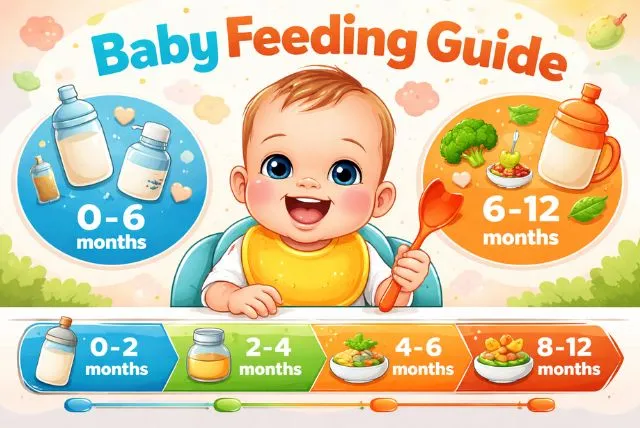
A baby feeding schedule helps parents understand how feeding patterns change as babies grow. During the early months, babies rely completely on milk. As they approach six months, they gradually begin tasting solid foods while still drinking milk.
According to Parents.com, feeding amounts increase gradually as babies grow and their nutritional needs expand.
- 0–2 months: feed every 2–3 hours
- 2–4 months: feed every 3–4 hours
- 4–6 months: milk feeds continue with possible early food interest
- 6–8 months: introduce two to three small meals daily
- 8–12 months: three meals daily plus milk feeds
Feeding Pattern for Babies 2–4 Months
Babies between two and four months often drink larger milk feeds and may sleep slightly longer during the night. Feeding usually occurs every three to four hours. Babies at this stage still receive all nutrition from breast milk or formula.
Feeding Pattern for Babies 4–6 Months
Between four and six months, babies begin showing curiosity about food. They may watch adults eat or attempt to grab food. While milk remains the main source of nutrition, this stage prepares babies for the introduction of solid foods.
—
How Much to Feed a Baby
Feeding amounts vary depending on a baby’s age, weight, and appetite. Babies usually regulate how much they eat naturally. Some days they may drink more milk than others, especially during growth spurts.
According to HealthyChildren.org, formula-fed babies typically drink about 2.5 ounces of formula per pound of body weight each day.
Signs Your Baby Is Eating Enough
Parents often worry whether their baby is getting enough milk. Healthy weight gain, regular wet nappies, and a satisfied baby after feeding are strong signs that babies are receiving adequate nutrition.
Understanding Baby Growth Spurts
Babies often eat more frequently during growth spurts. According to HealthyChildren.org, growth spurts commonly occur around two to three weeks, six weeks, and three months of age.
—
When to Start Solid Foods for Babies
Most babies are ready to start solid foods around six months of age. At this stage, babies need additional nutrients such as iron that milk alone may not provide in sufficient amounts.
According to Mayo Clinic, parents should wait until babies show readiness signs before introducing solid foods.
Signs a Baby Is Ready for Solids
Babies usually show clear developmental signs when they are ready for solids. These include good head control, the ability to sit with support, and interest in watching others eat.
Best First Foods for Babies
First foods should be soft, smooth, and easy to swallow. Common starter foods include iron-fortified cereal, mashed fruits, vegetable purees, and blended meats.
—
Baby Food Chart for the First Year
As babies grow, their diet gradually expands beyond milk. According to UNICEF, babies between six and eight months should eat two to three meals per day alongside milk feeds.
Feeding Babies 6–8 Months
Babies usually eat mashed or pureed foods during this stage. Good options include mashed bananas, vegetable purees, yogurt, cereals, and blended meats rich in iron.
Feeding Babies 8–12 Months
Between eight and twelve months, babies begin eating more textured foods and soft finger foods. They may start feeding themselves small pieces of soft fruits, cooked vegetables, pasta, or scrambled eggs.
—
Breastfeeding vs Formula Feeding
Both breastfeeding and formula feeding can support healthy baby development. Many parents choose breastfeeding because it provides natural antibodies and adapts to the baby’s nutritional needs. However, infant formula is designed to provide balanced nutrition when breastfeeding is not possible or preferred.
Parents should choose the feeding method that works best for their family, lifestyle, and medical needs.
Benefits of Breastfeeding
Breastfeeding supports immunity and provides perfectly balanced nutrition for babies. It may also reduce the risk of infections and certain childhood illnesses.
When Formula Feeding Is Helpful
Formula feeding may be necessary when breastfeeding is not possible or when parents choose it for personal or medical reasons. Infant formula is carefully designed to meet babies’ nutritional needs.
—
Important Baby Feeding Safety Tips
Feeding safety becomes especially important once babies begin eating solids. Parents should always supervise babies during meals and ensure that food is soft and cut into small pieces.
According to Stanford Children’s Health, certain foods should be avoided during the first year due to choking risks.
Foods to Avoid During the First Year
Honey should not be given before the age of one because it can cause infant botulism. Hard foods such as whole nuts, popcorn, and large grapes may cause choking and should also be avoided.
Iron-Rich Foods for Babies
Iron becomes especially important after six months of age. According to the Cleveland Clinic, iron-rich foods include fortified cereals, beans, and pureed meats.
—
Supporting Baby Development Beyond Feeding
Feeding routines are closely connected with other aspects of baby development, such as sleep, play, and oral care. Creating a balanced daily routine helps babies feel secure and supports healthy growth.
Parents adjusting to early routines may benefit from reading this guide on parenting advice for new mums.
Sleep patterns are also closely linked to feeding routines. Many parents find it helpful to follow a consistent baby sleep schedule.
Play and Feeding Development
Playtime helps babies develop the motor skills needed for self-feeding. Activities like reaching for toys and sitting upright strengthen muscles used for eating. Parents can explore developmental activities in this guide on play with your newborn.
Early Oral Care for Babies
As babies begin eating solids, oral hygiene becomes important. Cleaning gums and teeth helps prevent early dental issues. Parents can learn more about safe oral care tools in this guide to the best newborn toothbrush.
—
Final Thoughts
The first year of feeding is an exciting journey for both babies and parents. Babies gradually transition from frequent milk feeds to exploring solid foods and developing self-feeding skills.
By following a baby feeding guide, observing hunger cues, and offering age-appropriate foods, parents can support their baby’s growth and development throughout the first year. Every baby develops at their own pace, so flexibility and patience are key to creating a positive feeding experience.
