
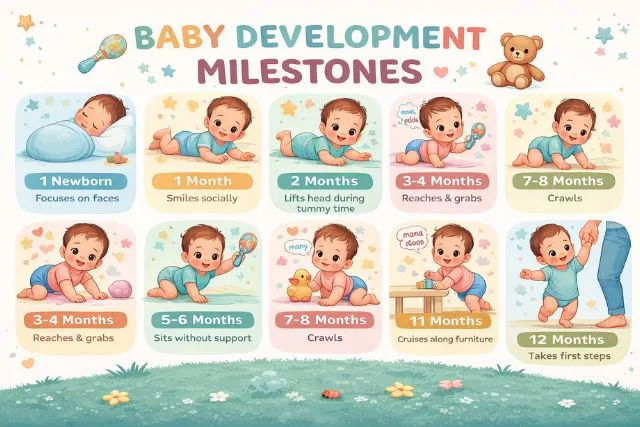
Understanding baby development milestones is very important for parents during the first year. This is the time when your baby grows quickly and learns new skills almost every month. From smiling and rolling to standing and speaking simple words, each stage shows progress. This guide will help you understand baby growth stages by month in a simple and clear way. It will also help you know what is normal, what to expect, and how you can support your baby’s healthy development at home.
What Are Baby Development Milestones?
Baby development milestones are skills or behaviours that most babies achieve at a certain age. These milestones help parents and doctors track a baby’s growth in areas like movement, communication, learning, and social interaction. According to the CDC, milestones are grouped into key areas such as physical, cognitive, language, and social development. They are not strict rules but general guidelines, and small variations are completely normal.
Why Milestones Matter for Parents
Milestones give parents a clear idea of what to expect as their baby grows. They help track progress and identify any delays early. This allows parents to take timely action if needed. They also provide reassurance that a baby is developing properly and building essential skills step by step.
Newborn Development Milestones (0–2 Months)
In the first two months, babies are adjusting to life outside the womb. Their development focuses on reflexes, bonding, and sensory awareness. Babies begin to recognise voices and may start to smile socially. They also learn to focus on faces and follow movement with their eyes. According to Mayo Clinic, early interaction, such as talking and eye contact, plays a big role in brain development at this stage.
Key Skills in the First Weeks
Babies respond to sounds, cry to communicate, and begin showing early social smiles. Their movements are limited but improving, especially in head control. These small developments are important because they build the foundation for future physical and emotional growth.
Baby Growth Stages by Month (2–4 Months)
Between two and four months, babies become more active and expressive. They smile more often, respond to familiar faces, and begin babbling. They also start reaching for toys and pushing up during tummy time. This stage is important for building strength and coordination. Babies learn through interaction, so daily play, talking, and singing are essential for supporting both physical and cognitive development.
Social and Communication Growth
Babies start expressing emotions clearly and enjoy interacting with people. They respond to voices and try to copy sounds. Regular communication helps develop language skills and builds a strong bond between parents and babies.
Infant Developmental Stages (4–6 Months)
At this stage, babies show rapid development in movement and awareness. They recognise familiar faces, respond to their name, and begin rolling over. They also explore objects by bringing them to their mouth. This stage supports sensory learning and muscle development. Providing safe toys and allowing exploration helps babies gain confidence and improve coordination.
Motor Skill Development
Babies develop better control over their body. Rolling, reaching, and grasping become easier. These skills are important for future milestones like sitting and crawling. Encouraging movement helps strengthen muscles and improves balance.
Baby Milestones First Year (6–9 Months)
From six to nine months, babies become more mobile and curious. Many can sit without support and may start crawling. They also begin to understand simple words and respond to familiar voices. According to the Cleveland Clinic, this is also the stage when safety becomes important as babies start moving more and exploring their surroundings.
Growing Curiosity and Movement
Babies explore more actively, play simple games, and show curiosity about objects. Their increased movement helps build coordination and strength. Creating a safe space allows them to explore freely while reducing the risk of injury.
Infant Milestones Chart (9–12 Months)
In the final months of the first year, babies achieve major milestones. Many begin to stand, cruise along furniture, or take their first steps. They also say simple words and follow basic instructions. This stage shows strong development across physical, cognitive, and language areas. Each baby progresses differently, so timing may vary.
Early Walking and Talking Skills
Babies begin experimenting with walking and speaking. They may take small steps with support and try to repeat simple words. Encouragement and regular interaction help improve these skills and build confidence.
Understanding Baby Growth and Development
Baby development follows a general order but varies in timing. Some babies may skip certain milestones, like crawling, and still develop normally. According to UNICEF, development includes physical, cognitive, language, and emotional growth, all working together to support overall progress.
The Four Key Development Areas
Development includes movement, learning, communication, and social interaction. Each area supports the others, helping your baby grow in a balanced way. Focusing on all areas ensures healthy and steady development.
How to Support Your Baby’s Development
Parents play an important role in helping babies reach their milestones. Simple activities like talking, reading, and singing support language development. Tummy time builds strength, and safe toys encourage exploration. Creating a daily routine also helps babies feel secure and develop healthy habits.
- Talk and interact with your baby daily
- Encourage safe play and movement
- Provide age-appropriate toys
- Maintain a consistent routine
Following a baby sleep schedule can improve your baby’s overall development and behaviour. As your child grows, you may also face challenges like sleep changes, such as the 15-month sleep regression, which is a normal part of development.
Using the best educational toys for kids can also support learning and improve both cognitive and motor skills.
When Should You Be Concerned?
While every baby develops at their own pace, it is important to watch for signs of delay. If your baby does not respond to sounds, avoids eye contact, or shows no interest in movement, you should seek advice. Missing several milestones over time may also need attention. Early support can make a big difference in helping your baby develop properly.
Common Warning Signs to Watch
Look for signs like no smiling, no babbling, or lack of movement. If your baby is not progressing in multiple areas, it is best to consult a healthcare professional. Early action helps address concerns effectively.
Final Thoughts on Baby Development Milestones
The first year of your baby’s life is full of growth and exciting changes. Each milestone shows progress and learning. By understanding baby development milestones, you can support your child with confidence. Focus on love, care, and a safe environment. As your child grows, you can also prepare for future stages like school readiness by learning at what age children start school.
FAQs
1. What are baby development milestones?
Baby development milestones are skills most babies achieve at certain ages, including physical, social, language, and cognitive abilities.
2. At what age do babies start smiling?
Most babies start smiling socially around 6 to 8 weeks, especially when they see familiar faces.
3. When do babies start crawling?
Babies usually begin crawling between 6 and 9 months, though some may skip crawling and move directly to walking.
4. Is it normal if my baby misses a milestone?
Yes, every baby develops at their own pace. Small delays are normal, but consistent delays should be discussed with a doctor.
5. How can I support my baby’s development?
You can support development through talking, playing, tummy time, reading, and providing a safe and stimulating environment.
6. When should I worry about developmental delays?
If your baby shows no response to sounds, avoids eye contact, or misses multiple milestones, consult a healthcare professional.
Disclaimer
This content is for informational purposes only and does not replace professional medical advice. Every baby develops at their own pace. If you have concerns about your child’s growth or development, consult a qualified healthcare professional for proper evaluation and guidance.
