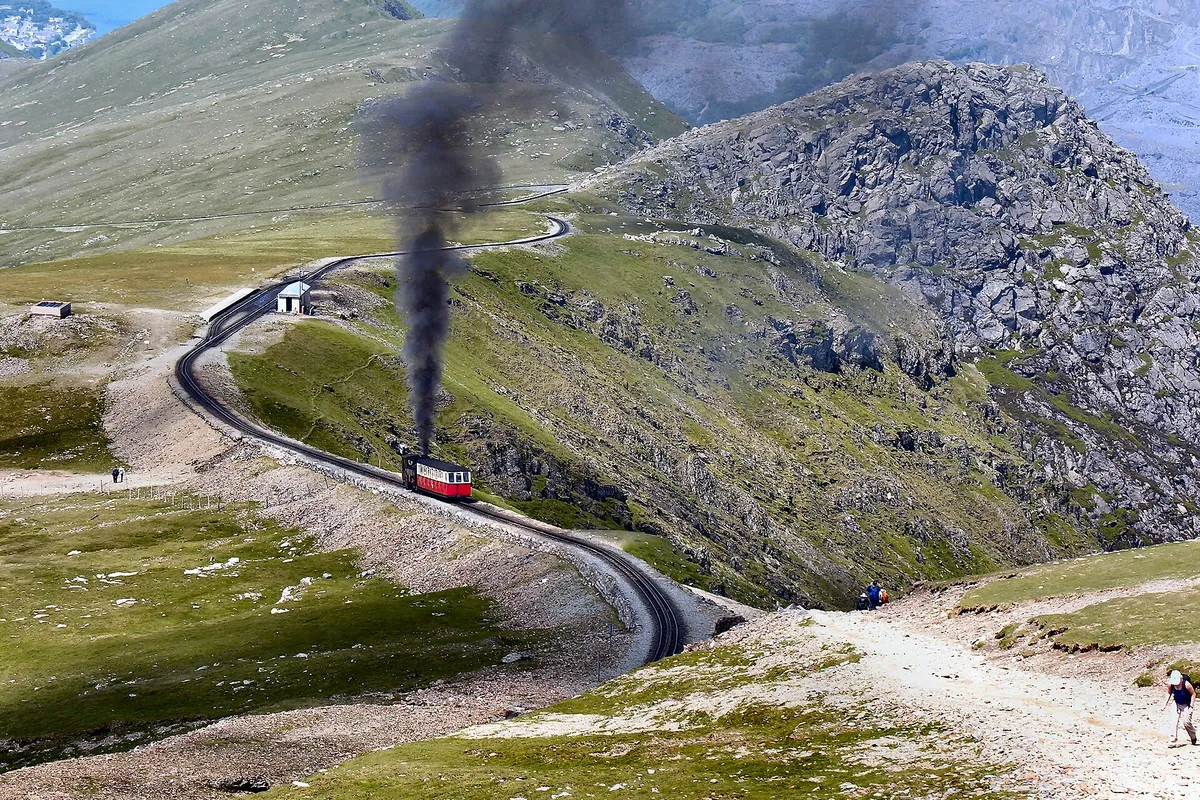
A good adventure story for kids has a hero, a challenge and a safe journey home. Here are five original short adventure stories, free to read aloud, each taking about four to five minutes. They’re set in real kinds of places British children know: a windy moor, a rocky beach at low tide, a bluebell wood, the train up Yr Wyddfa in Wales, and the bottom of Gran’s garden at night.
They suit children from about 4 to 9. Each story has a way to join in and questions for afterwards, and two of them quietly teach real outdoor skills: watching the tide, and what to do if you get lost. Further down: the five-step shape of every adventure story, real mini adventures to try in the UK, outdoor safety tips, and nine adventure books to read next.
The short answer
- Read one now: The Kite That Got Away (ages 4–7), Rockpool Rangers (5–8), Kai and the Whistle (5–9), The Train to the Top of Wales (5–9), Captain Gran’s Night Expedition (4–8).
- Every adventure has 5 steps: home, the call, challenges, help, and home again. See the shape.
- Try one for real: rockpooling, a garden camp-out or geocaching. Ideas and safety tips.
Story finder: adventure stories at a glance
Pick by age or by the adventure you have coming up. Times assume about 120 words a minute.
| Story | Time | Ages | What it’s about | Best for |
|---|---|---|---|---|
| 1. The Kite That Got Away | 4 min | 4–7 | Chasing · the moors · not giving up | Windy days |
| 2. Rockpool Rangers | 5 min | 5–8 | The seaside · sea creatures · watching the tide | Before a trip to the beach |
| 3. Kai and the Whistle | 4 min | 5–9 | Getting lost · staying calm · woodland | Before a woodland walk |
| 4. The Train to the Top of Wales | 4 min | 5–9 | Mountains · trains · patience | Train lovers and holidays in Wales |
| 5. Captain Gran’s Night Expedition | 5 min | 4–8 | Garden camping · the night sky · small adventures | Summer evenings and first camp-outs |
5 short adventure stories for kids
Lines in blue repeat through each story, so your child can join in. The stories get a little longer and more detailed as you go down the page.
The Kite That Got Away
Ravi had a new kite. It was red, with a long tail of yellow bows, and it was shaped like a dragon.
“Today,” said Ravi’s big sister Anika, “is the perfect day for kites. Listen to that wind.”
They climbed to the top of the hill behind their house, where the grass was short and the sky was huge. Ravi held the string. Anika held the kite up high. “One, two, three… GO!”
WHOOSH went the wind, and up went the kite!
The dragon kite swooped and soared. It danced over their heads. Its yellow tail wiggled like it was laughing. Ravi let out more string, and more, until the kite was a tiny red dot against the clouds.
Then the wind blew harder than ever.
WHOOSH went the wind, and off went the kite!
The string slipped right through Ravi’s fingers. The dragon kite sailed away across the hilltop, over the stone wall, and out across the moor.
“My kite!” shouted Ravi.
“Come on,” said Anika, grabbing his hand. “We’ll follow it.”
They climbed over the stile. They squelched through a boggy bit where the ground was soft and brown. They jumped over a little stream, one, two, three, landing on the far side with a splash. The kite was always just ahead, bobbing along, too high to reach.
A flock of sheep watched them go by. “Baa,” said one of them, which might have meant “It went that way.”
At the top of the next rise stood a lonely hawthorn tree, bent sideways by the wind. And caught in its branches, flapping its yellow tail, was the dragon kite.
But it was high up. Much too high for Ravi. Even too high for Anika.
Ravi’s lip wobbled. They had come all this way.
“Don’t give up yet,” said Anika. She looked around. Behind the tree was a farmer, mending a fence. He had a very long crook, the kind with a curly hook at the end, for catching sheep.
“Excuse me,” said Anika politely. “Please could you help us get our kite down?”
The farmer looked at the kite. He looked at Ravi’s wobbly lip. Then he smiled and lifted his crook up into the branches. With one gentle twist, he hooked the kite’s string and brought it down, safe and sound, without a single rip.
“I’ve rescued sheep, lambs and one very cross goose with this crook,” said the farmer. “But never a dragon.”
“Thank you!” said Ravi and Anika together.
The wind was calmer now. Ravi held the string very tightly, with both hands, and wrapped it twice round his wrist. Anika held the kite up high.
WHOOSH went the wind, and up went the kite!
And this time, Ravi didn’t let go. He flew his dragon kite all the way home across the moor, and the sheep watched it go by, and the farmer waved his crook from the top of the hill.
Join in: Every time the wind blows, make a big WHOOSH together and wave your arms like a kite.
- What did Ravi and Anika have to cross to follow the kite?
- How did they get the kite down?
- What would you do if your kite blew away?
Rockpool Rangers
Maisie and Grandad went rockpooling on the first day of the holidays. Grandad had a bucket, a net and a little book with pictures of sea creatures in it. Maisie had her wellies on the wrong feet, but she didn’t care.
“Rule number one,” said Grandad, as they reached the rocks. “The tide is out now, but it will come back in. See that big red rock, with the seaweed on top?”
Maisie nodded.
“When the water touches the red rock, we pack up and go back to the sand. No arguments. That’s the Rockpool Ranger rule.”
“Rockpool Ranger rule,” said Maisie seriously.
Look in the water, quiet and slow. Who’s hiding there? Let’s see, let’s go!
The first rockpool was as clear as a window. At the bottom, Maisie saw something red and squishy, like a blob of jam.
“That’s a beadlet anemone,” said Grandad. “When the tide’s in, it opens up its tentacles to catch food. When the tide’s out, it closes up to keep wet.”
Maisie touched it very gently with one finger. It felt sticky, like it was holding on to her.
Look in the water, quiet and slow. Who’s hiding there? Let’s see, let’s go!
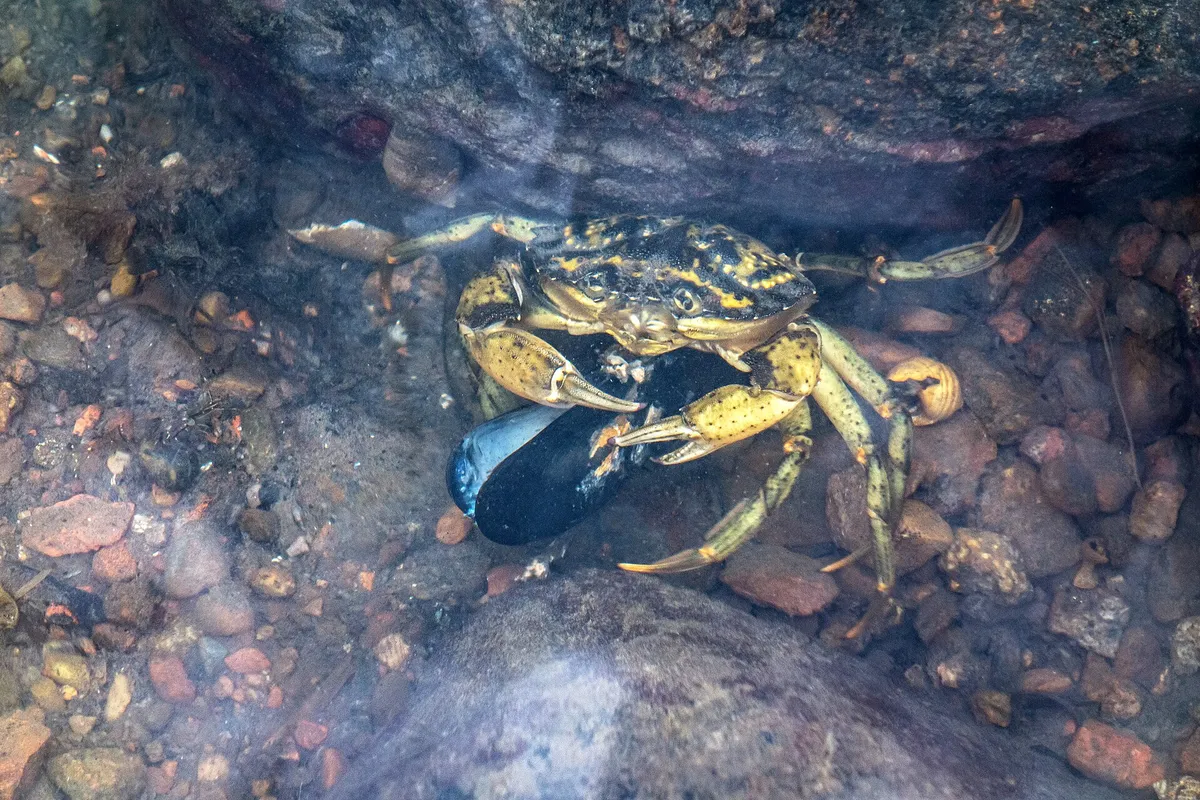
In the next pool, Grandad lifted a rock, slowly and carefully. Something scuttled out sideways. It was a crab, green and brown, with its claws held up like a boxer.
“A shore crab,” said Grandad. He showed Maisie how to pick it up from behind, so it couldn’t pinch. They put it in the bucket with some seawater and looked at it closely. It looked back at them with eyes on little stalks.
“Now,” said Grandad, “we put the crab back exactly where we found it. And we put the rock back the right way up, because lots of tiny creatures live underneath.”
Look in the water, quiet and slow. Who’s hiding there? Let’s see, let’s go!
In the biggest pool of all, Maisie spotted something orange stuck to the side of a rock. It had five arms and was shaped like a star.
“A starfish!” she shouted. “Grandad, a real starfish!”
“A common starfish,” said Grandad, looking in his book. “If it loses an arm, it can grow a new one.”
Maisie was so busy watching the starfish that she didn’t notice the waves creeping closer. Swish. Swish. Then she heard a splash, and looked up.
The sea was lapping at the bottom of the big red rock.
Maisie thought about the starfish. She thought about all the pools they hadn’t looked in yet. Then she stood up and picked up the bucket.
“Grandad,” she said, “the water’s touching the red rock. Rockpool Ranger rule.”
Grandad looked very proud. “Well spotted, Ranger Maisie.”
They walked back across the rocks to the soft sand, carefully, because seaweed is slippery. They sat on a towel and ate sandwiches with only a tiny bit of sand in them, and watched the tide come in over the rockpools, covering the anemone and the crab and the starfish.
“They’ll be all right,” said Grandad. “The sea is their home. And tomorrow, when it goes out again, they’ll be waiting for us.”
Join in: Count the creatures Maisie finds on your fingers. At the end, can your child remember Grandad’s tide rule?
- What three creatures did Maisie find?
- What was the Rockpool Ranger rule? Why was it important?
- Why did they put the rock back the right way up?
Kai and the Whistle
Before every walk in the woods, Kai’s mum hung a bright orange whistle round his neck.
“If you ever get lost,” she said, “what do you do?”
Kai rolled his eyes. He had heard this a hundred times. “Hug a tree. Stay put. Blow the whistle.”
“Good,” said Mum. “And you won’t be in trouble. Not ever. We’ll just be glad to find you.”
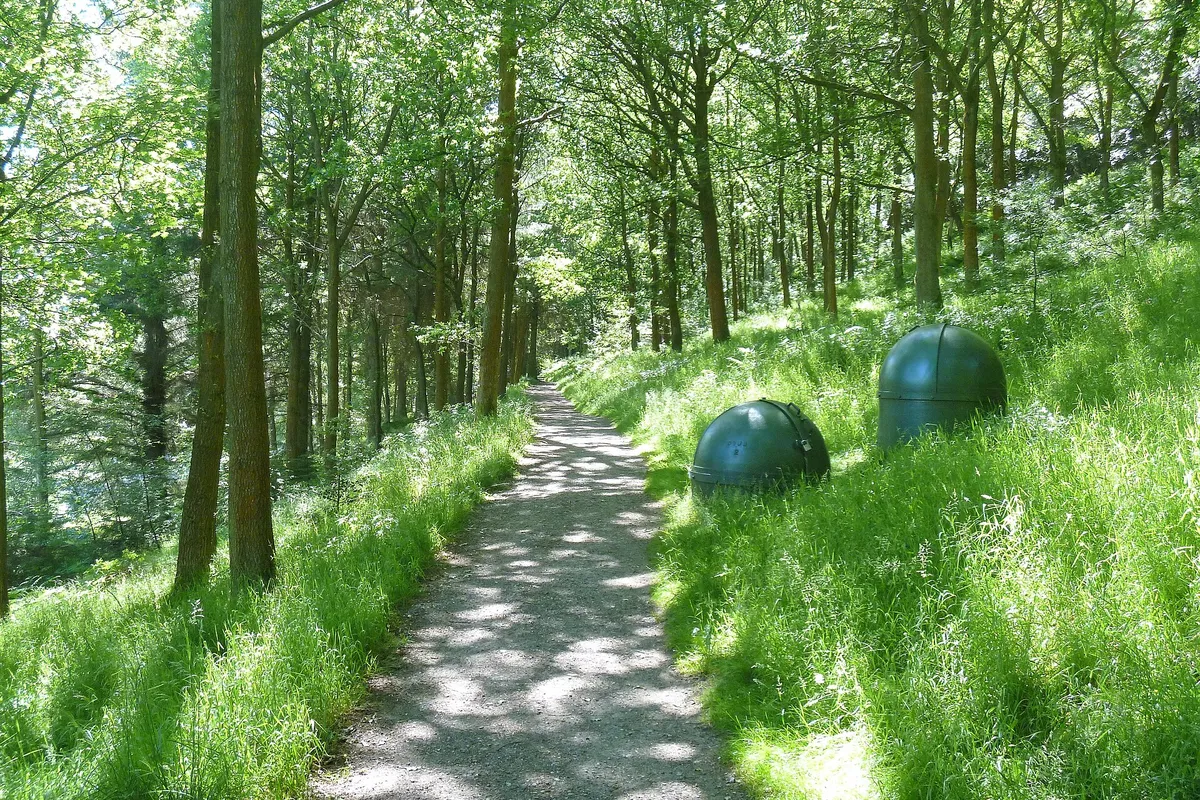
It was a bright spring day, and the wood was full of bluebells. Kai, Mum and his little brother Leo walked along the path, looking for squirrels. Leo wanted to stop and look at every single beetle.
Kai spotted a squirrel. It ran across the path and up a tree. Then it jumped to another tree, and another. Kai followed it, looking up. Off the path. Through the bluebells. Past a fallen log covered in moss. The squirrel leapt into a big holly bush and disappeared.
Kai looked round. “Mum?”
There was no path. There was no Mum. There was no Leo. Just trees in every direction, all looking exactly the same.
Kai’s heart started to thump. His legs wanted to run, any direction, as fast as they could. But then he remembered.
Hug a tree. Stay put. Blow the whistle.
He found a big oak tree, wide and old, and he put his arms round it. The bark was rough and solid. It felt like the tree was holding him back.
“I’m staying here,” he told the tree. “If I keep moving, they’ll be looking in the wrong place.”
Then he put the orange whistle in his mouth and blew as hard as he could. PHEEEEEEP!
A pigeon flapped out of a tree in surprise. Then the wood was quiet.
Hug a tree. Stay put. Blow the whistle.
Kai blew again. PHEEEEP! PHEEEEP! PHEEEEP! Three times, because Mum had said three blasts means “I need help”.
He waited. He counted to twenty. His tummy felt fluttery, but his feet stayed still.
Then, from far away, he heard a voice. “Kai! KAI!”
“I’M HERE!” he shouted. “BY THE BIG TREE!” And he blew the whistle again, so they could follow the sound.
Crunch, crunch, crunch, came footsteps through the leaves. And there was Mum, running, with Leo bouncing on her hip.
She hugged Kai so tightly that the whistle squeaked.
“You did exactly the right thing,” she said, and her voice was a bit shaky. “I could hear your whistle from right over by the stream. A whistle carries much further than shouting.”
“I followed a squirrel,” said Kai, in a small voice. “Am I in trouble?”
“Not one bit,” said Mum. “Next time, we’ll follow the squirrel together.”
On the way home, Leo wanted to know everything. What was it like being lost? Was it scary? Did the tree talk?
“A bit scary,” said Kai. “But the tree helped. And the whistle.” He touched the orange whistle round his neck. He decided he would never, ever roll his eyes about it again.
Join in: When Kai remembers what to do, say the three steps together: hug a tree, stay put, blow the whistle.
- What three things did Kai do when he was lost?
- Why is it better to stay in one place than to keep walking?
- Why do you think Mum said he wouldn’t be in trouble?
The Train to the Top of Wales
Seren had been waiting all year for this day. She and Nain, which is Welsh for grandma, were going to ride the train up Yr Wyddfa, the highest mountain in Wales.
“It’s 1,085 metres high,” Seren told everyone in the queue at Llanberis station. “That’s higher than ten big skyscrapers on top of each other. Probably.”
The train was small and bright red, with a little engine that pushed from behind. Nain said trains had been climbing this mountain since 1896, long before even she was born. Seren pressed her nose to the window.
Chuff, chuff, chuff, up the mountain we go. Higher and higher, and slower and slow.
At first, the train went through green fields full of sheep. Then past waterfalls, crashing white down the rocks. Then the trees stopped, and there was only grass, and rocks, and the steep side of the mountain dropping away below.
“Look,” said Nain. Far below them was a lake, shining like a mirror. Walkers on the path looked as small as ants.
Chuff, chuff, chuff, up the mountain we go. Higher and higher, and slower and slow.
Then, just as they were nearly at the top, the train went into a cloud.
Everything went white. Seren couldn’t see the lake. She couldn’t see the walkers. She could hardly see the rocks right next to the track.
“Oh no,” said Seren. “We came all this way, and now we can’t see anything.”
“Mountains make their own weather,” said Nain calmly. “Clouds come and clouds go. Sometimes, if you wait, you get a surprise.”
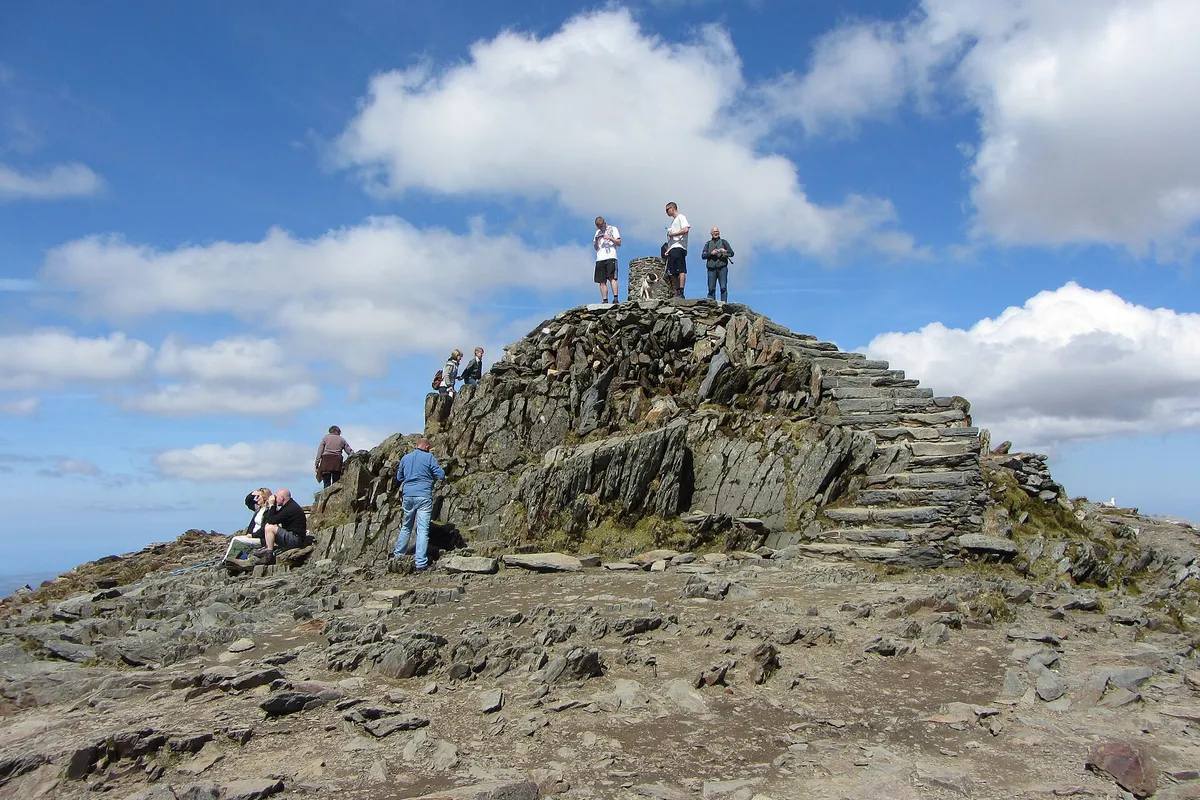
The train stopped at the summit station. Seren and Nain got out. It was cold and damp, and the wind made Seren’s hair go everywhere. They climbed the stone steps to the very top, where there was a big round cairn, and Seren touched it.
“I’m the highest person in Wales,” she said. But she couldn’t see a thing. Just white, white, white.
“Let’s wait a few minutes,” said Nain, and she got out a flask of hot chocolate.
Chuff… chuff… wait for the view…
They waited. They sipped hot chocolate. Seren counted to a hundred. Then, slowly, the cloud began to thin, like someone pulling back a curtain.
First, Seren saw the rocks. Then the path. Then the lake, far, far below. And then, all at once, the cloud blew away completely, and the whole world was spread out beneath them: mountains and valleys, lakes like puddles, and far away, glittering in the sun, the sea.
Everyone at the top gasped. Then a man started clapping. Then everyone was clapping, as if the mountain had done a magic trick.
“That,” said Nain, “is the surprise.”
On the train back down, Seren didn’t say much. She just looked out of the window and smiled. When they got home, she drew a picture of the view, with the sea and the lakes and a tiny red train, and she wrote at the bottom, in her best handwriting: Worth the wait.
Join in: Make the steam train noises together: chuff, chuff, chuff, getting slower as the train climbs higher.
- What did Seren see on the way up the mountain?
- What happened at the top? How did Seren feel?
- Have you ever had to wait for something that was worth it?
Captain Gran’s Night Expedition
“Expedition members,” said Gran, standing at the back door in her walking boots and a woolly hat. “Are you ready?”
“Ready, Captain Gran!” said Ollie and Bea.
The expedition was a camp-out. Not far away, on a mountain or in a jungle. It was at the bottom of Gran’s garden, under the apple tree. But Gran said that didn’t matter one bit. “An adventure,” she said, “is anywhere you’ve never been at night.”
They had a tent, three sleeping bags, three torches, a flask of cocoa and a packet of biscuits. Gran had a map she had drawn herself, with the shed marked as BASE CAMP and the pond marked as THE GREAT LAKE.
One step, two steps, into the night. Brave explorers, hold your torches tight.
They put up the tent together. The poles kept falling over, and Bea got tangled in the groundsheet, and Ollie laughed so much he had to lie down. But in the end, it stood up, a little bit lopsided, under the apple tree.
As the sun went down, the garden began to change. The colours faded to grey. The shed turned into a dark, mysterious shape. The apple tree rustled.
“Time to explore,” said Captain Gran. They switched on their torches.
One step, two steps, into the night. Brave explorers, hold your torches tight.
At the Great Lake, their torches lit up two shiny eyes. Ollie grabbed Bea’s arm. Then the eyes blinked, and a frog plopped into the water.
By the hedge, they heard snuffling and rustling. Gran shone her torch very gently, and there, trundling along the bottom of the fence, was a hedgehog. They all stood still as statues until it disappeared through a gap into next door’s garden.
“Expedition notes,” whispered Gran. “One frog. One hedgehog.”
Then, from the big tree at the end of the road, came a sound. Too-wit… too-woo.
“A tawny owl,” whispered Gran. “Actually, it’s two owls. One says too-wit, and the other one answers too-woo.”
“They’re talking to each other!” whispered Bea.
One step, two steps, into the night. Brave explorers, hold your torches tight.
Back at the tent, they drank cocoa and ate biscuits. Then Gran said, “Final mission. Torches off.”
Ollie wasn’t sure. It would be very dark. But he clicked his torch off, and so did Bea, and so did Gran.
At first, everything was black. Then, slowly, their eyes got used to it. And above them, in the gap between the apple leaves, the sky was full of stars. Dozens of them. Then hundreds.
“Your eyes need about twenty minutes to get really good at seeing in the dark,” said Gran softly. “The longer you look, the more stars you’ll find.”
They lay on their backs with their heads poking out of the tent, finding stars. Ollie found one that was moving, but Gran said that was an aeroplane. Bea found a really bright one, and Gran said it might be a planet.
One by one, the explorers got sleepy. Bea yawned. Ollie’s eyes closed and opened and closed again.
“Expedition complete,” whispered Captain Gran, tucking their sleeping bags up to their chins. “One frog. One hedgehog. Two owls. And more stars than anyone could count.”
And under the lopsided tent, at the bottom of the garden, three brave explorers fell asleep.
Join in: Turn the lights down and use a torch for the second half of the story. Switch it off for the very last line.
- What did the explorers find in the garden at night?
- Why did Gran say an adventure can be anywhere?
- Where could we go on a small adventure of our own?
How long each story takes to read aloud:
Bar length is out of 700 words. Read-aloud times at about 120 words a minute.
The 5-step shape of every adventure story
From fairy tales to film blockbusters, adventure stories tend to follow the same journey: away from home and back again. Once children know the shape, they can use it to make up their own:
Try it at bedtime: let your child choose a hero and a place, then take turns adding a step. For more ready-made ideas, our 5 minute bedtime stories include a recipe and story dice.
Real mini adventures to try in the UK
The best thing about adventure stories is that they can lead to real ones. These are all small enough for a weekend, and most are free:
| Adventure | Where | Cost | Ages | Top tip |
|---|---|---|---|---|
| Rockpooling | Rocky beaches at low tide | Free | 4+ | Check tide times; bring a bucket, not a net that scrapes rocks |
| Woodland walk with a whistle | Any local wood or forest park | Free | 3+ | Practise the “hug a tree” plan first |
| Garden camp-out | Your own garden | Free | 4+ | Turn torches off for 20 minutes to see more stars |
| Geocaching | Hidden caches all over the UK | Free app (basic) | 6+ | A real treasure hunt using GPS on a phone |
| Kite flying | Open hills and beaches | Cost of a kite | 4+ | Keep well away from power lines |
| Mountain railway | Snowdon Mountain Railway, Llanberis | Paid; check the railway’s website | Any | Summit trips depend on season and weather |
For bigger trips, our guides to outdoor adventures with kids and camping with kids have plenty more ideas.
Outdoor safety: what to teach children before an adventure
Two of the stories on this page, “Rockpool Rangers” and “Kai and the Whistle”, were written to make these lessons stick. Talk them through before your next trip:
9 adventure books for kids
Easy to find in UK libraries and bookshops. The first six are picture books; the last three suit older or more confident readers.
More stories and ideas from Kids Magazines
- A treasure-map adventure for older children: “Grandad’s Treasure Map” in our stories for 7-year-olds.
- Gentler stories for lights out: 5 minute bedtime stories and bedtime stories for 5-year-olds.
- Stories with a heart: our stories about kindness.
- Plan a real family trip with making travel fun for the whole family.
Adventure stories for kids: your questions answered
What is a good adventure story for kids?
A good adventure story for children has a character who leaves somewhere safe, faces a few challenges that get harder, finds help or a clever idea, and comes home a bit braver. It should feel exciting without being frightening. The five stories on this page follow that shape, from chasing a runaway kite to a night-time expedition in the back garden.
What age are adventure stories for?
Children enjoy adventure stories from about age 3, as long as the danger is small and the ending is safe. Four- to six-year-olds like simple quests, such as “The Kite That Got Away”. From about seven, children enjoy more suspense and real-world detail, like getting lost in “Kai and the Whistle”. Each story on this page has an age range in the story finder.
How can I make up an adventure story with my child?
Use the five-step shape: start at home, add something that sets the adventure off, give the hero three challenges that get harder, bring in a helper or clever idea, and finish back home. Let your child choose the hero and the place, then take turns adding what happens next.
What should my child do if they get lost outdoors?
In woods or parks, teach children to stay in one place, for example by hugging a tree, because it’s much easier to find someone who isn’t moving. A whistle carries further than a voice. At the beach, the RNLI advises teaching children to find a lifeguard. Always tell children they will not be in trouble for getting lost, so they aren’t afraid to call out.
Is rockpooling safe for children?
Rockpooling is a safe, popular activity with sensible precautions. The RNLI advises checking the tide times before you go, because the tide can come in surprisingly quickly and cut people off. Choose a landmark that tells you when to head back, wear shoes with good grip on slippery rocks, supervise young children closely, and put creatures and rocks back where you found them.
Can children go up Yr Wyddfa (Snowdon)?
Yes. Yr Wyddfa is 1,085 metres high, the highest mountain in Wales. Many families walk up one of the main paths, and the Snowdon Mountain Railway has carried passengers up from Llanberis since 1896. Whether the train reaches the summit depends on the season and the weather, so check the railway’s own website before you go, and always check the mountain forecast if you plan to walk.
Why are adventure stories good for children?
Adventure stories let children try out being brave, solving problems and coping with setbacks from the safety of a sofa or bed. They also give you a natural way to talk about real-world skills, such as what to do if you get lost or why we watch the tide, in a way that feels exciting rather than scary.
Sources: RNLI: beach and coastal safety advice (tide times, lost children and lifeguards); Eryri National Park Authority: Yr Wyddfa; Snowdon Mountain Railway: history of the railway; Natural England: The Countryside Code; Hug-A-Tree and Survive programme guidance for lost children. Stories © Kids Magazines. Featured photo: Denis Egan, Wikimedia Commons, CC BY 2.0.