
These mystery stories for 9 and 10 year olds are four original “solve it yourself” cases. Each comes with a detective’s notebook of clues, a pause to work it out, and a hidden answer you can open when you’re ready: a vanishing cake, a coded message in a library book, a prank at 10:15 and a bike that disappeared from a locked shed.
They take about two to three minutes to read (plus thinking time) and suit confident readers in Years 5 and 6. After the cases, you’ll find how mysteries build inference skills, a four-step plan for writing your own, and mystery books for this age.
The short answer
- 4 new mysteries with fair clues and hidden answers, from warm-up to tricky.
- Includes a code to crack with a printable-style code table.
- Builds inference, a key Year 5 and 6 reading skill: using evidence to explain what happened.
- Next reads: The Highland Falcon Thief, The London Eye Mystery, Agatha Oddly.
Last checked 26 November 2026. Stories © Kids Magazines, free to use at home and in class.
Mystery finder: choose your case
| Case | Difficulty | Detective skill | Read time |
|---|---|---|---|
| The Case of the Vanishing Victoria Sponge | ★☆☆ Warm-up | Spotting what doesn’t fit | 3 min |
| The Code in the Library Book | ★★☆ Code-breaker | Cracking a simple code | 2 min |
| The Clock That Stopped at 10:15 | ★★★ Tricky | Checking alibis against evidence | 3 min |
| The Mystery of the Locked Shed | ★★★ Tricky | Working out what didn’t happen | 2 min |
Read times assume about 110 words a minute for independent reading. Thinking time not included!
4 mystery stories for 9 and 10 year olds
The Case of the Vanishing Victoria Sponge
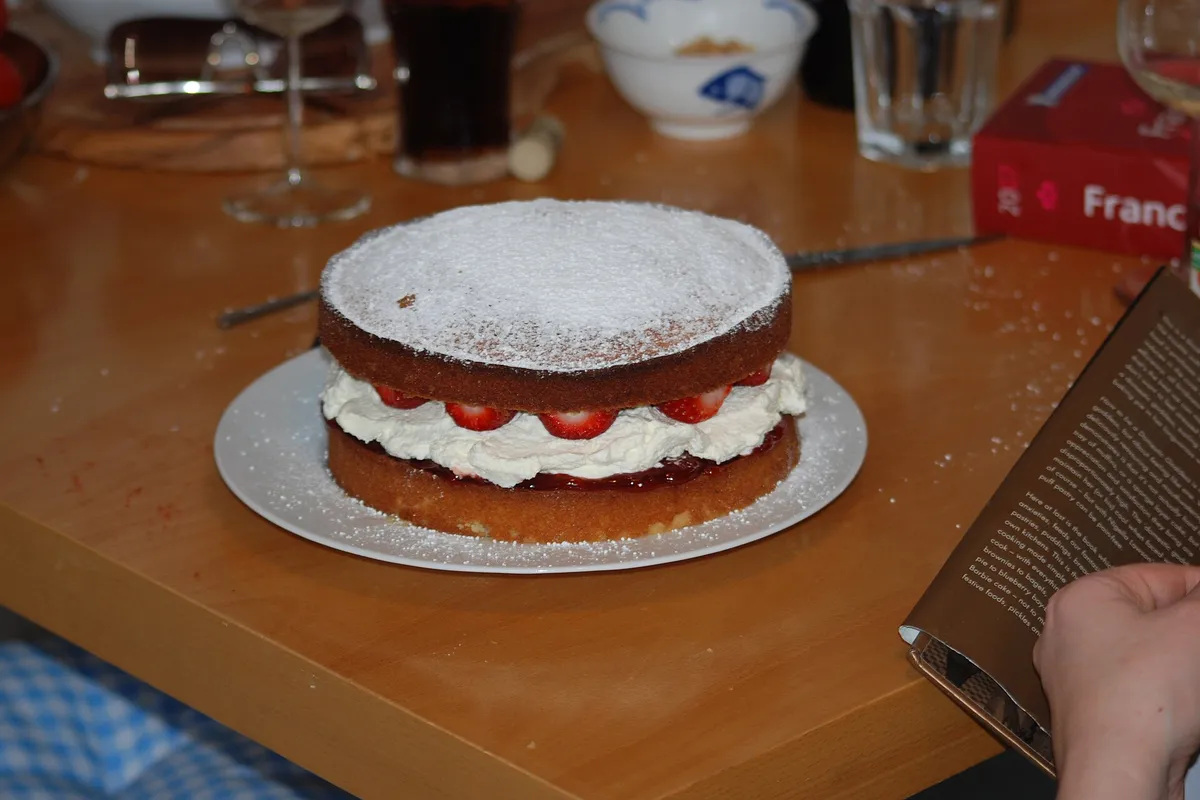
Gran had baked a Victoria sponge for the church cake sale: two golden layers, strawberry jam, a thick stripe of cream and a dusting of icing sugar on top. She put it on top of the fridge to keep it safe from Pudding, the family’s greedy spaniel, and went to the shop for paper plates.
When she came back twenty minutes later, a huge wedge was missing.
“Right,” said Gran, putting down her shopping. “Nobody leaves this kitchen until I know who did this.”
Her granddaughter, Hana, who was ten and wanted to be a detective, got out her notebook.
On the kitchen floor was a trail of floury paw prints leading from the fridge to the back door. Pudding was lying in her basket, licking her lips. Hana’s brother Ollie, who was twelve, pointed at her. “Case closed,” he said. “The dog did it.”
But Hana wasn’t so sure. She crouched down and looked at the paw prints. Then she looked at the fridge. Then she looked at Pudding, and then, very carefully, at Ollie.
She noticed four things. First, the fridge was taller than Gran. Pudding could jump onto a chair, but she had never once managed to get on top of the fridge. Second, the floury paw prints went from the fridge to the door, but there was no flour on the worktop or the chair, and no flour on Pudding’s paws, which were spotless. Third, the bag of flour by the back door had been opened, and there was a small, round handprint in the spilled flour beside it. Fourth, Ollie’s left sleeve had a tiny red smear on the cuff. And everybody in the family knew that Pudding hated strawberries. She spat them out every single time.
Hana closed her notebook. “I know who ate the cake,” she said.
- The cake was on top of the fridge, which Pudding has never been able to reach.
- The paw prints were made of flour, but Pudding’s paws were clean.
- There was a handprint in the spilled flour by the back door.
- Ollie had a red smear on his sleeve, and Pudding won’t eat strawberries.
Can you solve it? Stop and think before you open the answer. Who did it, and which clue proves it?
Show the answer
It was Ollie. He reached the cake (he’s tall enough), ate a slice and got jam on his sleeve. To frame the dog, he pressed his fingers into flour to make fake paw prints across the floor, which is why there was a handprint in the spilled flour and why Pudding’s paws were clean. And Pudding would never have eaten cake full of strawberry jam. Ollie apologised, bought Gran a new packet of strawberries with his pocket money, and helped her bake a second cake for the sale.
The Code in the Library Book
Every Friday, Year 5 had library time with Mrs Okafor, the school librarian. She had been at the school for thirty years, and she knew where every book was without looking.
One Friday, Leo borrowed a battered copy of a detective story. When he got home and opened it, a small square of paper fell out. On it, in neat capitals, was a message:
NFFU JO UIF IBMM BU UISFF PO NPOEBZ. LFFQ JU B TFDSFU GSPN NST PLBGPS.
Leo stared at it. It looked like nonsense. But he’d just read a chapter about secret codes, and he remembered one of the simplest: a shift code, where every letter is swapped for a letter a certain number of places along the alphabet.
He wrote the alphabet across the top of a page. Then he tried moving each letter of the message one place back in the alphabet. N became M. F became E. F became E. U became T.
M… E… E… T. “Meet,” he whispered.
He kept going, letter by letter, until the whole message made sense. Then he grinned, because he realised what it was about, and why it had to be kept from Mrs Okafor.
Can you decode it too? Use the code wheel below, and remember: each letter has moved one place forward, so you need to move it one place back.
- The code is a shift of one: A became B, B became C, and so on.
- To decode, move each letter one place back: N becomes M, F becomes E.
- Z would become A in the code, so A decodes back to Z.
- The message mentions a place, a time and a day.
Can you solve it? Stop and think before you open the answer. Who did it, and which clue proves it?
Show the answer
The message says: MEET IN THE HALL AT THREE ON MONDAY. KEEP IT A SECRET FROM MRS OKAFOR. Leo showed his teacher, who smiled and put a finger to her lips. It was the plan for a surprise party: Mrs Okafor was retiring after thirty years, and the whole school was going to fill the hall with the books she had recommended to them. On Monday at three, when she walked in, three hundred children held up their favourite book and shouted, “Thank you!” Mrs Okafor cried, and said it was the best plot twist she had ever read.
| Real letter | A | B | C | D | E | F | G | H | I | J | K | L | M | N | O | P | Q | R | S | T | U | V | W | X | Y | Z |
|---|---|---|---|---|---|---|---|---|---|---|---|---|---|---|---|---|---|---|---|---|---|---|---|---|---|---|
| Code letter | B | C | D | E | F | G | H | I | J | K | L | M | N | O | P | Q | R | S | T | U | V | W | X | Y | Z | A |

The Clock That Stopped at 10:15
When the headteacher, Mr Fairweather, walked into the school hall at break time, he stopped dead. On the big portrait of him by the stage, someone had stuck a curly paper moustache and a pair of googly eyes.
On the floor beneath it lay the hall clock. It had fallen off its hook, and its battery had popped out. The hands had stopped at exactly 10:15.
“So that’s when it happened,” said Ms Bhatt, the deputy head. “Whoever did this knocked the clock off the wall.”
Only three Year 6 pupils had been out of class between 10:00 and 10:30. Ms Bhatt asked each of them where they had been.
Jordan said he had been doing extra football practice on the field with the PE coach, from ten until half past. “I was outside the whole time,” he said.
Mia said she had been at her recorder lesson with Mr Lee, in the music room, from ten until twenty past. Mr Lee nodded. “She was with me. She played ‘Hot Cross Buns’ eleven times.”
Kieran said he had been returning books to the library. The library computer showed his books had been scanned back in at 10:40.
Ms Bhatt frowned. “They all sound possible,” she said.
But a girl called Priya, who was helping to tidy the hall, put up her hand. “Miss, can I ask Jordan something?” She looked down at his feet. “It poured with rain this morning from ten until about quarter to eleven. Everyone who came in from the field had to leave their muddy boots in the cloakroom. But your trainers are clean and dry. And you’ve got a bit of paper stuck to your jumper. It’s black and curly.”
Everyone looked at Jordan.
- The clock stopped at 10:15, so that’s when the prank happened.
- Mia’s alibi is confirmed by Mr Lee until 10:20.
- Kieran’s books were scanned at 10:40, which doesn’t prove where he was at 10:15.
- It rained heavily on the field from 10:00, but Jordan’s trainers were clean and dry, and he had black curly paper on his jumper.
Can you solve it? Stop and think before you open the answer. Who did it, and which clue proves it?
Show the answer
It was Jordan. If he had really been on the field in the pouring rain, his trainers would have been soaked and muddy. They were dry because he’d been inside. The black curly paper on his jumper matched the paper moustache. Kieran’s alibi looked weak, but it was evidence (the dry trainers and the paper) that pointed to Jordan. He admitted it was a dare from his older cousin. He apologised to Mr Fairweather, who, to everyone’s surprise, laughed, kept the moustache on the portrait for the rest of the day, and made Jordan rehang the clock.
The Mystery of the Locked Shed
On Saturday morning, Amara went to the garden shed to get her bike. She was meeting her friends at the park at ten. But when she unlocked the padlock and opened the door, the bike wasn’t there.
“Mum!” she shouted. “Someone’s stolen my bike!”
Mum came out in her dressing gown. Dad came out holding a piece of toast. Amara’s little brother, Zac, came out last, yawning.
“The shed was locked,” said Dad. “I checked it last night. And the key’s been on the hook in the kitchen all along.”
Amara got out her detective notebook and looked around. The padlock wasn’t broken. There were no marks on the door. Then she noticed something else. Across the top corner of the shed doorway, there was a big spider’s web, glistening with dew. It was completely unbroken, until Amara had walked through it a minute ago. And on the floor of the shed was a thin layer of dust, with only one set of footprints in it: hers.
“That’s strange,” she said slowly. “If a thief had opened this door, they’d have broken the web. And there’d be footprints in the dust.”
She thought back. When had she last ridden her bike? Wednesday. She’d cycled to the park after school with Zac. Then it had started raining, and Mum had picked them up in the car…
Amara turned to Zac. Zac turned rather pink.
“Zac,” she said, “on Wednesday, who was supposed to put the bikes away?”
- The padlock wasn’t broken, and the key never left the kitchen.
- A spider’s web across the doorway was unbroken until Amara walked through it.
- The only footprints in the dusty shed were Amara’s.
- The bike was last ridden on Wednesday, when it rained and Mum picked them up in the car.
Can you solve it? Stop and think before you open the answer. Who did it, and which clue proves it?
Show the answer
Nobody stole the bike from the shed, because the bike was never put back in the shed. The unbroken web and the dust with only Amara’s footprints prove the door hadn’t been opened for days. On Wednesday, when Mum picked them up in the rain, the bikes were left chained to the railings at the park, and Zac had promised to remind everyone, then forgot. They walked to the park, and there was Amara’s bike, a bit wet but safe, still chained up exactly where she’d left it. She made it to meet her friends, only five minutes late.
Why mystery stories build reading skills
Mysteries are brilliant for inference: reading between the lines. The national curriculum for English expects pupils in Years 5 and 6 to draw inferences such as characters’ feelings, thoughts and motives from their actions, and to justify them with evidence. That’s exactly what a detective does.
- Read the title. What might happen?
- Who do you expect to be the culprit?
- Write down every clue.
- Ask: what doesn’t fit?
- Rule suspects in or out.
- Explain your answer using a clue.
- Which clue was a red herring?
- Was the mystery fair?
How to write your own mystery: 4 steps
Make a detective kit
- A notebook and pencil for clues and suspects.
- A magnifying glass for close-up looks at fingerprints and footprints.
- A torch for under beds and behind sofas.
- Invisible ink: write with lemon juice and a cotton bud; to reveal it, ask an adult to warm the paper gently with a hairdryer.
- A code table like the one above, to send secret messages to friends.
For more puzzle fun, try our short mystery The Case of the Moved Bookmark, our stories for 7-year-olds (which include “The Great Lunchbox Mystery” for younger siblings), and our riddles for older brains.
6 mystery books for 9 and 10 year olds
More stories from Kids Magazines
- A quick mystery to start with: The Case of the Moved Bookmark.
- Laughs for younger readers: short funny stories for 8 year olds.
- Courage and doing the right thing: stories about bravery.
- Brain teasers: riddles for teens.
Mystery stories for 9 and 10 year olds: your questions answered
What are good mystery stories for 9 and 10 year olds?
Good mysteries for this age give readers fair clues and let them solve the case before the answer is revealed. The four original mysteries on this page include a clue list and a hidden answer. For books, try The Highland Falcon Thief, The London Eye Mystery, Agatha Oddly and Murder Most Unladylike.
Why are mystery stories good for children’s reading?
Mysteries make readers look for evidence, make predictions and work out what characters are thinking, which are exactly the inference skills in the Key Stage 2 English curriculum. In Years 5 and 6, children are expected to draw inferences about characters’ feelings, thoughts and motives from their actions and to justify them with evidence from the text.
Are these mysteries suitable for Year 5 and Year 6?
Yes. They’re written for 9 to 11 year olds and work well for guided reading, inference lessons and as models for children writing their own mysteries. Each takes about two to three minutes to read, plus thinking time.
How do I help my child solve a mystery story?
Encourage them to write down clues as they read, ask “What doesn’t fit?” and “Who could have done it, and who couldn’t?”. Make them explain their answer using a clue from the story before they check.
What is a shift code?
A shift code (also called a Caesar cipher) replaces each letter with one a fixed number of places along the alphabet. With a shift of one, A becomes B and B becomes C. To decode, you move each letter back. It’s one of the oldest codes in history and a brilliant first code for children.
Are Murder Most Unladylike books OK for 9 year olds?
Many 9 and 10 year olds love them. They’re classic boarding-school mysteries, but they do involve murders, so check whether your child is comfortable with that. The Highland Falcon Thief and Agatha Oddly are gentler choices.
How can my child write their own mystery?
Use the four-step plan on this page: a crime, three suspects, clues (including one red herring) and a reveal that explains every clue. Then swap stories with a friend and try to solve each other’s.
Sources: Department for Education, National curriculum in England: English programmes of study (Years 5 and 6 reading comprehension). Stories © Kids Magazines. Featured photo: João Silas, Wikimedia Commons, public domain.