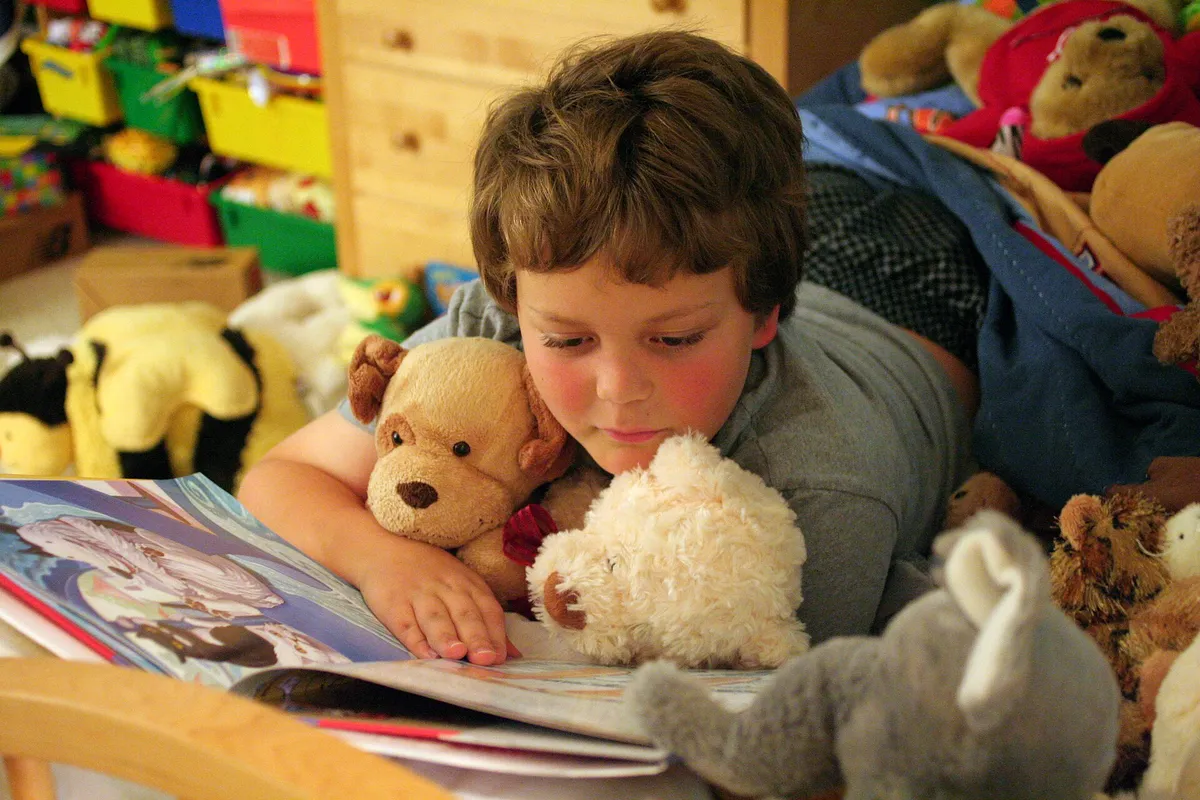
Five-minute bedtime stories are short enough for a tired child and long enough to feel like a proper story. Here are five original 5-minute stories for kids, free to read aloud tonight. Each one is 540 to 600 words, which takes about five minutes at a relaxed pace, and each one ends quietly, ready for lights out.
Meet a hedgehog building her winter bed, a baker who works while the town sleeps, the littlest cloud in the sky, a girl who collects quiet sounds in a jar, and the biggest dinosaur in the valley learning to tiptoe. They suit children from about 3 to 8. Further down: a simple way to make up your own five-minute story, story dice to get you started, and nine picture books that take about five minutes to read.
The short answer
- Read one now: Hattie Hedgehog’s Winter Bed (ages 3–6), The Night Baker (4–8), The Littlest Cloud (3–6), Polly’s Jar of Quiet Sounds (5–8), The Dinosaur Who Learned to Tiptoe (3–7).
- How long is 5 minutes? About 600 words read aloud at 120 words a minute.
- No book to hand? Use the 5-minute story recipe and roll a dice for a character, place and problem.
Story finder: 5-minute bedtime stories at a glance
Pick by age, mood or what your child is into. Times assume about 120 words a minute; reading a little slower at bedtime is no bad thing.
| Story | Time | Words | Ages | What it’s about | Best for |
|---|---|---|---|---|---|
| 1. Hattie Hedgehog’s Winter Bed | 5 min | 598 | 3–6 | Autumn · getting ready · nature | Autumn and early winter nights |
| 2. The Night Baker | 5 min | 575 | 4–8 | Night-time · a quiet town · making things | Children who wonder what happens at night |
| 3. The Littlest Cloud | 5 min | 557 | 3–6 | Feeling small · finding your place · rain | Rainy evenings |
| 4. Polly’s Jar of Quiet Sounds | 4 min | 537 | 5–8 | Listening · noticing · calming down | Children who find it hard to switch off |
| 5. The Dinosaur Who Learned to Tiptoe | 5 min | 553 | 3–7 | Dinosaurs · sleepovers · being gentle | Dinosaur fans and sleepover nights |
5 minute bedtime stories for kids
Lines in blue repeat through each story. After the first one, pause and let your child say it. Read the last one in each story slowly and quietly.
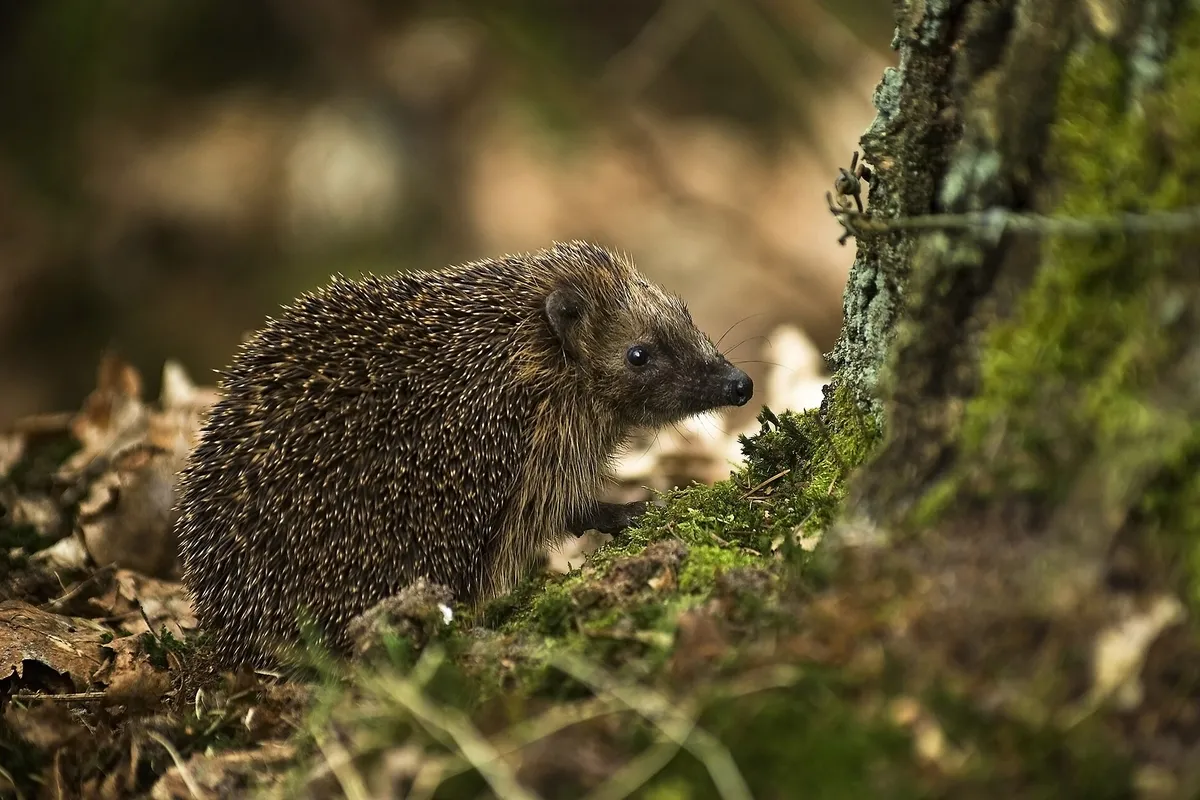
Hattie Hedgehog’s Winter Bed
The leaves on the big oak tree had turned orange and gold, and every morning there were more of them on the ground. The air smelled of bonfires and damp earth. Hattie Hedgehog sniffed it and knew. Winter was coming.
“Time to make my winter bed,” said Hattie. “A bed so cosy I can sleep right through until spring.”
But first, she was hungry. Very hungry. She snuffled through the garden at dusk, finding beetles under stones and worms in the wet grass. Snuffle, snuffle, crunch. She ate and ate until her tummy was round and full.
Snuffle, snuffle, gather and go. Hattie is building her bed, nice and slow.
Then she went looking for the perfect place. Under the shed was too draughty. Behind the bins was too smelly. But at the bottom of the garden, under the hedge, there was a quiet spot where the wind couldn’t reach and nobody ever went.
“Here,” said Hattie. “This is the one.”
She carried a big dry leaf in her mouth and laid it down. Then another, and another, until there was a soft, crackly floor.
Snuffle, snuffle, gather and go. Hattie is building her bed, nice and slow.
Next she found some moss, green and springy, growing on an old log. She pulled it up gently and pressed it into the leaves. Now the floor was soft as well as crackly.
A robin watched her from the fence. “What are you doing?” asked the robin.
“Making my winter bed,” said Hattie. “I’m going to sleep until spring.”
“The whole winter?” said the robin. “I stay awake all winter. I sing even when it snows.”
“Then you can sing for me,” said Hattie, “and I’ll dream about it.”
A squirrel scampered down the oak tree with an acorn in its mouth. It was very busy, burying acorns all over the lawn.
“Are you going to sleep all winter too?” Hattie asked.
“Oh no,” said the squirrel. “I just have lots of naps. And when I wake up hungry, I dig up an acorn. If I can remember where I put them.” It looked at the lawn, which was covered in little holes, and scratched its head.
Hattie smiled. She was glad she only had to remember one thing: where her bed was.
Snuffle, snuffle, gather and go. Hattie is building her bed, nice and slow.
Last of all, she gathered long dry grass and wove it over the top, round and round, until her bed had a roof. It looked like a little brown ball, tucked under the hedge. You would never know there was a hedgehog inside.
That evening, a girl called Esme came down the garden with her dad. They were cutting a small square hole at the bottom of the fence.
“What’s that for?” asked Esme.
“It’s a hedgehog highway,” said Dad. “So hedgehogs can get from garden to garden to find food. And we’ll leave this corner messy all winter, just in case someone is sleeping in it.”
Inside her bed, Hattie heard their voices, soft and far away. She curled up into a tight, prickly ball. Her nose was tucked under her tummy. Her breathing got slower, and slower, and slower.
Snuffle… snuffle… nice and slow.
Outside, the first frost crept across the grass. The robin sang one last song from the fence. And under the hedge, warm in her bed of leaves and moss and grass, Hattie Hedgehog fell asleep.
She would wake up when the daffodils came. But not yet. Not for a long, long time.
Join in: Each time Hattie adds something to her bed, pretend to tuck it round your child: a leaf on the toes, some moss on the tummy, some grass up to the chin.
- What three things did Hattie use to make her bed?
- Why did Esme’s dad cut a hole in the fence?
- If you made a winter bed, what would you put in it?
The Night Baker
In the middle of a little town, on a corner by the clock tower, there was a bakery. And in the bakery lived Mr Crumb, the night baker.
Mr Crumb did everything the wrong way round. When other people were waking up, he was going to bed. And when other people were going to bed, Mr Crumb was waking up.
Tonight, when the clock tower struck nine, he put on his white apron and his white hat. He turned on the warm yellow lights. He washed his hands. And he began.
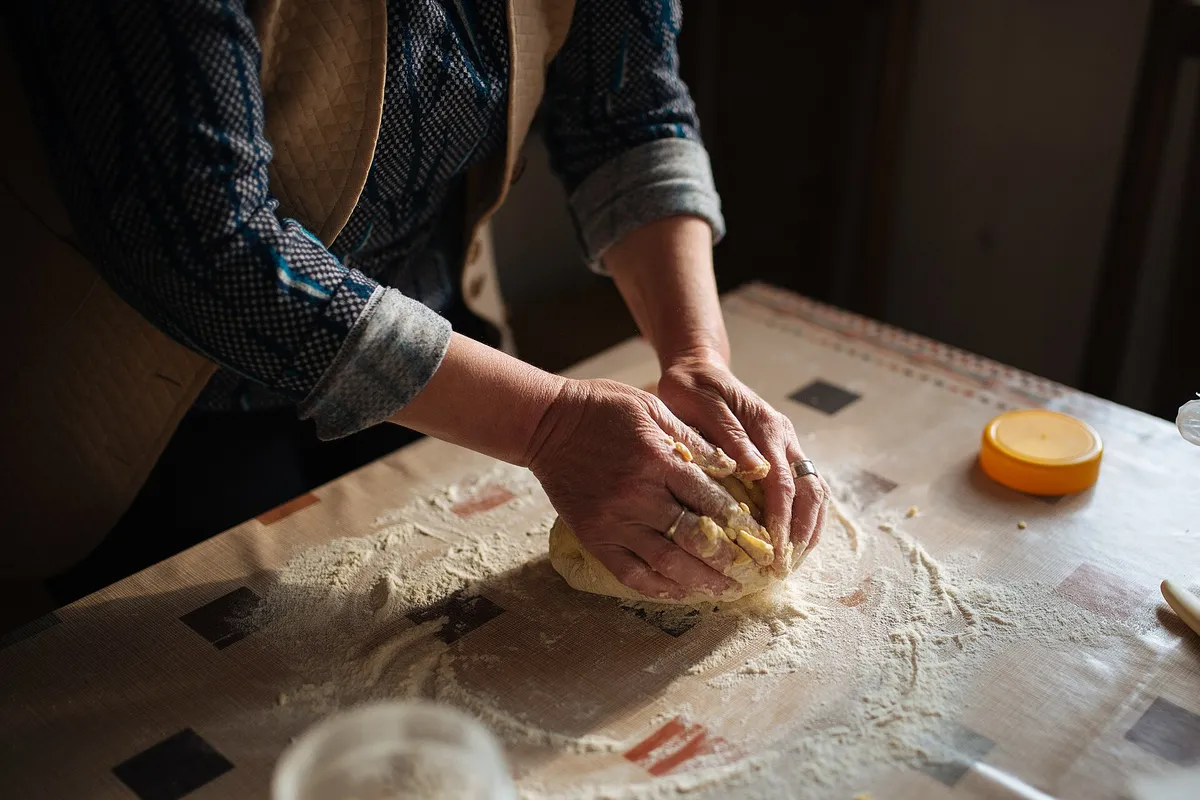
First, the flour. He poured it into a big bowl, soft and white like snow. Then the water, then the salt, then a little packet of yeast to make the bread rise. He stirred it all together with his hands until it was a sticky, gloopy lump.
Then he tipped the dough onto the table, and he kneaded it.
Push, fold, turn. Push, fold, turn. The town is asleep, and the oven is warm.
Outside, the streets were empty. The shop windows were dark. Up above the shops, people were tucked up in their beds.
Mr Crumb kneaded and kneaded, until the dough was smooth and stretchy. He put it back in the bowl, covered it with a cloth, and left it in a warm corner to rest.
“Sleep well, little dough,” he whispered. “Grow big and strong.”
While the dough rested, Mr Crumb made a cup of tea and looked out of the window. A fox trotted down the middle of the high street, as if it owned the town. A cat sat on a wall and washed its paws. The moon shone on the wet pavement. Somewhere far away, a train rumbled through the night, carrying people home.
When he came back, the dough had puffed up to twice its size, round and soft like a pillow.
Push, fold, turn. Push, fold, turn. The town is asleep, and the oven is warm.
Mr Crumb shaped the dough. He made long loaves for the café. He made round loaves for the school kitchen. He made a plaited loaf for Mrs Begum at number six, because it was her birthday. And he made one tiny loaf, no bigger than an egg, for the little boy at number twelve, who always pressed his nose against the bakery window on the way to school.
Then he opened the big oven door. A wave of heat rolled out. In went the bread, tray after tray.
Soon the whole bakery smelled warm and golden. The smell drifted out under the door, along the empty street, and up to the windows where everyone was sleeping. Some of them smiled in their sleep, though they didn’t know why.
Push… fold… turn…
Just as the sky turned from black to grey, Mr Crumb lifted the last loaf out of the oven and set it on the shelf. He took off his apron and his hat. He turned the sign on the door to OPEN.
Then he climbed the stairs to his little bedroom above the shop, and drew the curtains, and got into bed.
Down below, the town began to wake up. Doors opened. Footsteps clattered. And the little boy from number twelve pressed his nose to the bakery window and gasped. There, on the shelf, with his name written on a card, was a tiny loaf of bread.
But Mr Crumb didn’t see. Mr Crumb was fast asleep.
Join in: Every time Mr Crumb kneads the dough, knead your child’s back gently with your hands: push, fold, turn.
- Why did Mr Crumb do everything “the wrong way round”?
- Who did he bake the special loaves for?
- What would you like the night baker to make for you?
The Littlest Cloud
High up in the sky lived a little cloud called Wisp. Wisp was the smallest cloud in the whole sky. She was so small and thin that the sun shone right through her.
The big clouds were grey and puffy and important. They rumbled. They rolled across the sky. And when they wanted to, they rained.
“I want to rain too,” said Wisp.
The big clouds laughed a deep, rumbly laugh. “You’re too small,” they said. “You couldn’t even make a puddle.”
Wisp drifted away on her own. She tried to rumble like the big clouds, but all that came out was a tiny sigh, like a kitten yawning. She tried to roll across the sky, but a breeze blew her sideways, and she ended up tangled in the string of a red kite. A boy on the hill below tugged the string, and she floated free again.
“Sorry,” called Wisp. The boy didn’t hear. Nobody ever noticed a cloud as small as her.
She floated over a farm, where cows were munching grass. She floated over a river, where ducks were tucking their heads under their wings. She floated over a town, where people were hurrying home. She floated over a garden, where a girl called Ruby was sitting on the back step, looking sad.
Ruby had planted a sunflower seed in a pot. Every day she watched it. But the weather had been dry for a long time, and the little green shoot was drooping.
“I wish it would rain,” said Ruby, “just a little bit.”
Wisp heard her. “Just a little bit,” she thought. “I can do a little bit.”
So Wisp tried as hard as she could. She squeezed. She squished. She went a pale grey colour, like a pigeon’s wing. And out came one single drop of rain.
It fell down, down, down, and landed with a tiny plip right on the sunflower’s leaf.
Pitter, patter, plip, plop. Every drop helps, every single drop.
Ruby looked up. “Was that rain?”
Wisp squeezed again. Plip! And again. Plip, plop! But she was getting smaller and smaller.
Then something wonderful happened. Other little clouds came floating over: thin ones, wispy ones, ones the big clouds had always said were too small. One by one they joined together with Wisp, until they made one soft, grey, gentle cloud, right over Ruby’s garden.
“Together,” said Wisp, “we’re just the right size.”
Pitter, patter, plip, plop. Every drop helps, every single drop.
It wasn’t a big storm. There was no thunder and no lightning. It was the soft kind of rain that makes the grass smell sweet and taps gently on the windows. Ruby ran inside and watched it from her bedroom, with her chin on the windowsill.
The sunflower drank and drank. Its leaves lifted up. Its stem stood straight again.
The rain kept falling as the evening went dark. It tapped on the roof, pitter-patter. It dripped from the gutter, plip-plop. Ruby got into bed and listened to it, the gentlest sound in the world.
Pitter… patter… plip… plop…
By the morning, Wisp and her friends had rained themselves away into the soil. But in Ruby’s pot, the sunflower had grown a whole centimetre taller, reaching up towards the sky where the littlest cloud had been.
Join in: Make the rain with your fingers: tap gently on your child’s arms and back, pitter-patter, getting softer as the story ends.
- Why did the big clouds laugh at Wisp?
- How did the little clouds help each other?
- Have you ever felt too small to do something? What happened?

Polly’s Jar of Quiet Sounds
Polly was a very noisy girl. She stamped down the stairs. She sang in the bath. She laughed so loudly at dinner that the cat ran out of the room.
But at bedtime, Polly found it hard to be quiet. Her head was still full of noise. Her legs wanted to kick. Her mouth wanted to talk. When Mum turned off the light, Polly sang songs to the ceiling, and told the cat long stories, and asked for a glass of water, and then another glass of water, and then asked what would happen if a giraffe tried to ride a bike.
“Polly,” Mum would say, “it’s time to be quiet now.”
“I AM being quiet,” Polly would say, very loudly.
One evening, Grandpa came to stay. He gave Polly an empty glass jar with a lid.
“What’s this for?” asked Polly.
“It’s a jar for collecting quiet sounds,” said Grandpa. “Before you go to sleep, you have to catch five of them. But they’re very shy. You have to be very still and listen very hard.”
Polly thought this was silly. But she held the jar and sat on her bed. She listened.
At first, she couldn’t hear anything. Then… tick, tick, tick. It was the clock on the landing.
“Got one!” whispered Polly, and she opened the lid and closed it again, quickly.
Hush and listen, still as can be. What’s the next quiet sound for me?
She listened again. Downstairs, the kettle was starting to boil, very softly, like someone humming with their mouth closed. Hmmmmmm.
Polly opened the lid, and closed it again. “Two,” she said.
Hush and listen, still as can be. What’s the next quiet sound for me?
The cat padded into the room and jumped onto the end of the bed. It curled up on her feet and began to purr. Prrrrrr, prrrrrr. It was warm and rumbly, like a tiny engine.
“Three,” whispered Polly. She didn’t want to scare the purr away.
Hush and listen, still as can be. What’s the next quiet sound for me?
Outside, a car went past on the wet road. Shhhhhhh, it went, and then it was gone, and the street was quiet again.
“Four,” said Polly, very softly now. She lay down on her pillow, with the jar beside her.
But she couldn’t find the fifth sound. The clock had been caught. The kettle had been caught. The purr and the car were in the jar.
Grandpa came to say goodnight. “How many have you got?” he asked.
“Four,” said Polly. “There aren’t any more.”
“There’s always one more,” said Grandpa, “and it’s the quietest of all. Close your eyes and listen to the inside of you.”
Polly closed her eyes. She lay very, very still. And there it was. Soft and slow, in and out, in and out. Her own breathing.
Hush… and listen…
“Five,” murmured Polly. But she didn’t open the jar for that one. She wanted to keep it.
Grandpa tiptoed out and turned off the light. The clock ticked. The cat purred. And Polly, the noisiest girl in the whole street, was quiet at last.
Join in: After each sound, stop and listen together for a few seconds. What can you hear in your house right now?
- What were Polly’s five quiet sounds?
- Why didn’t she put the last sound in the jar?
- Close your eyes. What quiet sounds can you hear right now?
The Dinosaur Who Learned to Tiptoe
Bronty was the biggest dinosaur in the valley. Her neck was as long as a bus. Her tail was as long as two buses. And her feet were so big that when she walked, the whole ground shook.
BOOM. BOOM. BOOM.
One day, Bronty’s best friend Ted, who was a small boy with big glasses, said, “Will you come to my sleepover on Friday?”
Bronty was so happy that she jumped. BOOM! All the apples fell off the trees.
“But there’s one thing,” said Ted. “My baby sister Lily goes to sleep at seven o’clock. So we have to be very, very quiet. Can you tiptoe?”
Bronty had never tiptoed in her life. “Of course I can,” she said.
That evening, she practised. She lifted one enormous foot and put it down as gently as she could.
BOOM.
Tippy, tippy, tiptoe, soft as a feather. Tippy, tippy, tiptoe, quieter than ever.
Bronty tried again. She went slower this time. She thought about feathers, and bubbles, and snowflakes landing on a mitten.
Boom.
“Better,” said a little bird in a tree.
Tippy, tippy, tiptoe, soft as a feather. Tippy, tippy, tiptoe, quieter than ever.
Every evening that week, Bronty practised. On Monday she tiptoed past the sleeping crocodiles in the river, and only one of them opened an eye. On Tuesday she tiptoed through the wood, and the owls kept on dozing. On Wednesday she tried tiptoeing across a field of crunchy autumn leaves, which is the hardest test of all. Crunch, said the leaves. Crunch. Then, as she went slower, just a tiny crinkle.
“You’re getting good at this,” said the little bird.
By Thursday, she could tiptoe past a field of sheep without a single one waking up. She could even tiptoe past the grumpy old rhino, who had been woken up by everybody, every day, for a hundred years, and he didn’t stir at all.
On Friday, Bronty arrived at Ted’s house. She was much too big to go inside, so Ted’s mum put the sleeping bags in the back garden, under the stars. There were marshmallows. There was a torch. There were stories.
At seven o’clock, Ted’s mum carried baby Lily up to bed. “Quiet now,” she whispered.
Bronty needed to turn round to get comfortable. Everyone held their breath. She lifted one huge foot…
Tippy, tippy, tiptoe…
…and put it down without a sound. Not a boom. Not even a bump. Just the softest tap, like a raindrop on a leaf.
Ted gave her a silent thumbs up.
They lay on their backs and looked at the stars. Ted told Bronty the names of the ones he knew. Bronty told Ted about the old days, when the valley was full of dinosaurs. Their voices got quieter and quieter, until they were just whispers.
Then Ted fell asleep, curled up in his sleeping bag against Bronty’s warm side.
Bronty stayed awake a little longer. She looked up at Lily’s window. The light was off. Everything was quiet.
“Goodnight, Ted,” she whispered, in the smallest voice a dinosaur has ever used. She laid her long neck down on the grass, very gently, and closed her eyes.
And the biggest dinosaur in the valley fell asleep without making a single sound.
Join in: Stomp your feet loudly for Bronty’s first steps, then make them softer and softer until they’re just tiny taps of your fingers.
- Why did Bronty need to learn to tiptoe?
- What did she think about to help her be gentle?
- Can you tiptoe across the room so quietly I can’t hear you?
How close each story comes to the five-minute mark:
Bar length is out of 700 words. 600 words is five minutes at 120 words a minute.
How to make up your own 5-minute story
Some nights there’s no book to hand, or your child wants “a new one”. Every story on this page follows the same simple shape, and you can use it to invent your own in about five minutes:
- Use your child’s world. Their teddy, their street, their best friend’s name. Children love hearing about places they know.
- Keep the problem small. A lost hat, not a dragon attack. Big, scary problems wake children up.
- Let them add a bit. “And what do you think was behind the door?” Then use their answer.
- Always end in bed. Finish with the character going home, getting cosy and falling asleep. It’s a gentle hint.
Story dice: roll for a character, place and problem
Roll a dice three times, or let your child pick three numbers, then make up a story using the recipe above. A brave mouse on a houseboat who has a present to deliver? That’s tonight sorted.
| Roll | Character | Place | Problem |
|---|---|---|---|
| 1 | a sleepy owl | a lighthouse | has lost a favourite blanket |
| 2 | a small tractor | a snowy forest | wants to see the stars |
| 3 | a brave mouse | a houseboat | is looking for a friend |
| 4 | a grumpy cat | a castle tower | can’t stop hiccuping |
| 5 | a little robot | a busy railway station | needs to get home before bedtime |
| 6 | a polar bear cub | a treehouse | has a present to deliver |
If your child enjoys making up stories, they’ll probably love our stories for 7-year-olds too, which include a treasure map and a dragon who eats full stops.
9 picture books that take about 5 minutes to read
When you want a book instead, these favourites from UK libraries and bookshops each take roughly five minutes to read aloud, depending on how long you linger over the pictures.
More stories and ideas from Kids Magazines
- Even calmer stories for winding down: our bedtime stories for 5-year-olds, plus a full bedtime routine.
- Stories by age: 3-year-olds, 4-year-olds and 7-year-olds.
- Tablets creeping into bedtime? Read our guide to screen time for kids.
- Go hedgehog spotting at dusk with ideas from outdoor adventures with kids.
5-minute bedtime stories: your questions answered
How long is a 5-minute story?
Read aloud at a relaxed pace of about 120 words a minute, a five-minute story is around 600 words. At bedtime many parents read a little slower, so anything from about 500 to 650 words fits comfortably into five minutes. Each story on this page is close to that length.
What age are 5-minute stories for?
Most children from about 3 to 8 enjoy a five-minute story. Three- and four-year-olds like simple ones with a repeating line to join in with, such as “The Littlest Cloud” or “Hattie Hedgehog’s Winter Bed”. Older children enjoy a bit more humour and detail, like “The Night Baker” or “Polly’s Jar of Quiet Sounds”. The story finder above gives an age range for each one.
Can I read two 5-minute stories at bedtime?
Yes. Two short stories take about ten minutes, which fits into most bedtime routines. Agree the number before you start, and read the calmest one last. On this page, “Polly’s Jar of Quiet Sounds” and “The Dinosaur Who Learned to Tiptoe” both end very quietly.
How do I make up a 5-minute story?
Use a simple shape: one minute to introduce a character and a place, one minute for what they want, two minutes for three tries with a repeating line, and one minute for a sleepy ending where the character goes home and falls asleep. The story dice table on this page gives you a character, place and problem to start with.
Are 5-minute stories good for a bedtime routine?
They work well, because they are predictable and short. The NHS recommends a regular bedtime routine for children, with the same steps in the same order each night, and avoiding screens in the hour before bed. A short story read in bed, after bath and teeth, is an easy signal that it’s nearly time to sleep.
Is it better to read a book or tell a story from memory?
Both are good. Reading from a book introduces new words and shows children how print works. Telling a story from memory lets you look at your child, use their name, and change the story as you go. Many families mix both: a book, then a short made-up story with the lights off.
Do hedgehogs really sleep all winter, like Hattie?
Yes. In the UK, hedgehogs usually hibernate from around November until March, depending on the weather. Hedgehog Street, the campaign run by the People’s Trust for Endangered Species and the British Hedgehog Preservation Society, suggests cutting a 13cm by 13cm gap at the bottom of garden fences so hedgehogs can travel between gardens, and leaving a wild corner where they can nest.
Sources: NHS: Healthy sleep tips for children; Hedgehog Street (People’s Trust for Endangered Species and British Hedgehog Preservation Society): hedgehog highways and hibernation guidance; Department for Education: The reading framework (2023). Stories © Kids Magazines. Featured photo: John Morgan, Wikimedia Commons, CC BY 2.0.