These stories about sharing for preschoolers are short, original and written for children aged 3 to 5. Each one shows a different, practical way to share: taking turns with a timer, splitting something fairly, making room for friends, keeping one special toy safe and working together to make something better.
They take about two minutes to read aloud. After the stories, you’ll find what the Early Years Foundation Stage expects at this age, why sharing is genuinely hard for preschoolers, and simple turn-taking games that make it easier.
The short answer
- 5 new stories, about 2 minutes each, for ages 3–5.
- Each teaches a skill: timers, fair halves, making room, special toys, working together.
- Normal at this age: grabbing and “mine!”. Turn-taking comes before true sharing.
- Don’t force it: teach turns, use a timer and praise sharing when it happens.
Last checked 26 November 2026. Stories © Kids Magazines, free to read at home, nursery and school.
Story finder: sharing stories by skill
| Story | Theme | Sharing skill | Read aloud |
|---|---|---|---|
| Two Friends and One Red Spade | Taking turns · using a timer | Turn-taking with a timer | 1 min |
| The Biggest Biscuit | Fair sharing · splitting in half | One cuts, the other chooses | 1 min |
| Bear’s Big Umbrella | Sharing with friends · kindness | Sharing makes room for everyone | 2 min |
| Ruby’s Special Rabbit | It’s OK to have special things | Put special toys away; share the rest | 2 min |
| The Crayons Who Made a Rainbow | Sharing makes things better | Together we make more | 2 min |
5 stories about sharing for preschoolers
Lines in blue repeat. Pause and let your child join in.
Two Friends and One Red Spade
At nursery, there was a big sandpit and one red spade. It was the best spade. It was shiny and strong and just the right size.
Amir grabbed it. Then Lottie grabbed it too. They both pulled. “Mine!” said Amir. “Mine!” said Lottie.
Miss Rose came over with a little sand timer. The sand inside was pink. “When the sand runs out, it’s time to swap,” she said.
Pink sand falling, falling down. When it stops, we swap around!
Amir dug first. Dig, dig, dig. Lottie watched the pink sand fall. It was hard to wait. She jiggled her feet. Then the sand ran out!
Pink sand falling, falling down. When it stops, we swap around!
Amir gave Lottie the spade. Lottie dug. Dig, dig, dig. Amir found a bucket and helped fill it. Together, they made a sandcastle with a tower on top.
When the sand ran out again, Lottie didn’t even need reminding. She held out the spade. “Your turn,” she said.
Pink sand falling, falling down. Taking turns, we built a town!
Join in: Turn an imaginary sand timer upside down with your child each time it’s someone’s turn.
- Why were Amir and Lottie pulling the spade?
- How did the sand timer help?
- What else could we use a timer for?
The Biggest Biscuit
Grandma gave Isla and Theo one big round biscuit. Only one. With chocolate chips.
“I want the bigger half!” said Isla. “No, I want the bigger half!” said Theo.
Grandma smiled. “Here’s a trick. Isla, you break it. Theo, you choose first.”
Snap it, share it, half for you. Half for me makes two!
Isla held the biscuit. She thought very hard. If she broke it wonky, Theo would pick the big piece. So she broke it slowly and carefully, right down the middle. Snap!
Theo looked at both halves. He looked very closely. They were exactly the same. “Um… this one,” he said.
Snap it, share it, half for you. Half for me makes two!
They munched their biscuits side by side. Crunch, crunch. Then Isla found a chocolate chip that had fallen on the plate. She looked at Theo. She broke it in half too. It was very small.
Theo laughed so much that he got crumbs everywhere, and Grandma laughed too.
Join in: Pretend to snap a biscuit in half with your hands, then share it out.
- Why did Isla break the biscuit so carefully?
- Was Grandma’s trick fair? Why?
- What else could we share in half?

Bear’s Big Umbrella
Bear had a big red umbrella. One day, it started to rain. Pitter-patter, pitter-patter.
Bear put up his umbrella. He was cosy and dry.
Pitter-patter, drip and drop. Come under here, the rain won’t stop!
Then he saw Rabbit, sitting under a leaf. Drip! The leaf was too small. Rabbit was very wet. “Come under my umbrella,” said Bear. And Rabbit hopped in.
Then they saw Duck. “Ducks like rain,” said Duck. “But I’d like to come anyway.” So Duck waddled in.
Pitter-patter, drip and drop. Come under here, the rain won’t stop!
Then they saw tiny Mouse, shivering by a puddle. “Is there room for me?” squeaked Mouse.
Bear looked. It was a bit of a squeeze. Bear’s bottom was poking out in the rain. But he shuffled up, and Mouse climbed onto his foot.
“Plenty of room,” said Bear, even though his bottom was wet.
They all walked home together under the big red umbrella, singing a rain song. And Bear thought that a wet bottom was a small price to pay for so many friends.
Join in: Make rain with your fingers, pitter-patter on the table or your child’s back.
- Who did Bear share his umbrella with?
- How do you think Mouse felt when Bear said yes?
- Was it easy for Bear to share? Why?
Ruby’s Special Rabbit
Ruby’s friend Kofi was coming to play. Ruby was excited. But she was worried too.
“What if Kofi wants to play with Flopsy?” she asked Dad. Flopsy was Ruby’s rabbit. She was soft and grey, and Ruby had cuddled her every night since she was a baby.
Dad nodded. “Flopsy is very special. Let’s put her somewhere safe while Kofi is here. Then you can choose the toys you’re happy to share.”
Special things can stay with me. Other toys we share, you see!
So Ruby put Flopsy on her pillow. Then she chose: the train set, the dressing-up box and the big bag of blocks.
When Kofi came, they built a tower. They wore pirate hats. They made the train go so fast it fell off the track. Ruby didn’t mind sharing any of it.
Special things can stay with me. Other toys we share, you see!
At the end, Kofi said, “Can I see your rabbit? I saw her on your bed.” Ruby thought about it. Then she fetched Flopsy and held her out, very carefully, so Kofi could stroke her ear.
“She’s soft,” said Kofi. “I’ve got a dog called Mr Biscuit. He’s my special one.”
Ruby smiled. Everyone, it seemed, had a special one.
Join in: Give a big hug to your own special toy at the end.
- Why didn’t Ruby want to share Flopsy?
- Which toys did she choose to share?
- Who is your special toy?
The Crayons Who Made a Rainbow
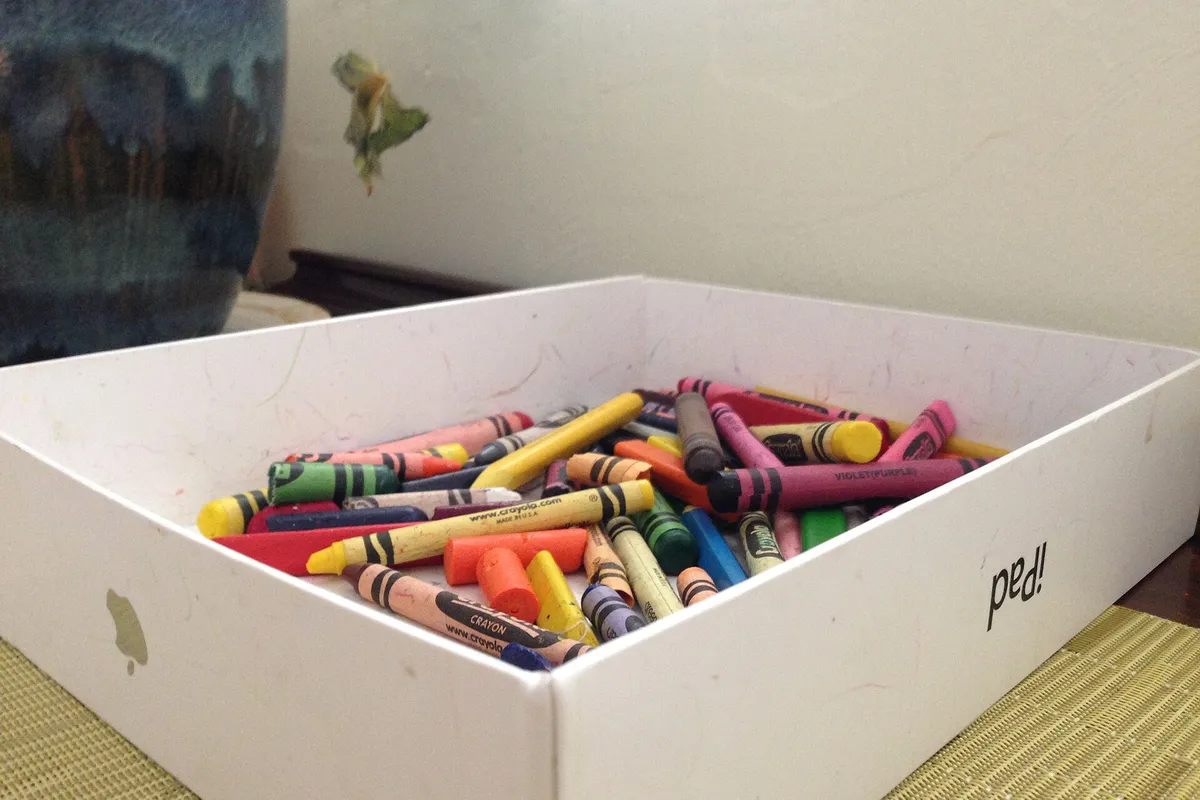
In a box on the nursery table lived some crayons. Red, orange, yellow, green, blue and purple.
One day, a little girl wanted to draw a rainbow. She picked up Red. Red drew a lovely red line. Then Red said, “I’ll do the whole rainbow by myself!”
But a rainbow made only of red looked just like a big red stripe. That wasn’t a rainbow at all.
One colour, two colours, three and four. Share the page and make some more!
“Can I help?” asked Orange. Red thought about it. “All right,” said Red. So Orange drew an orange stripe, right underneath.
“And me!” said Yellow. “And me!” said Green. Then Blue. Then Purple. Each crayon had a turn, one after another, stripe by stripe.
One colour, two colours, three and four. Share the page and make some more!
When they had finished, the little girl held up the paper. There, from one side to the other, was the most beautiful rainbow anyone had ever seen.
Red looked at it for a long time. “It’s much better with everyone,” said Red, quietly. And all the crayons agreed.
Join in: Name each colour together, and point to something that colour in the room.
- Why didn’t Red’s rainbow look like a rainbow?
- What happened when all the crayons shared the page?
- Shall we draw a rainbow together, taking turns with each colour?
Why sharing is hard for preschoolers
If your three-year-old snatches, hides toys or shouts “mine!”, that’s normal. Sharing asks a lot of a young child: they have to understand that someone else wants the toy too, wait (which is hard when you’ve only been alive for a few years) and trust they’ll get it back.
- “Mine!” is a favourite word
- Play alongside other children more than with them
- Need adults to help with turns
- Can wait for a short turn with help
- Start to notice how friends feel
- Timers and simple rules help a lot
- Take turns in games more independently
- Begin to suggest fair solutions
- Can explain why sharing matters
Every child is different, so treat these as rough guides. If you’re interested in how children’s thinking develops at these ages, our explainer on Piaget’s theory covers the preschool stage.
What the Early Years Foundation Stage expects
In England, nurseries, childminders and Reception classes follow the Early Years Foundation Stage (EYFS). Personal, social and emotional development is one of its three prime areas. By the end of Reception, the Early Learning Goal for Building Relationships says children should:
- Work and play cooperatively and take turns with others.
- Form positive attachments to adults and friendships with peers.
- Show sensitivity to their own and to others’ needs.
That’s the end of Reception, when most children are 5. In nursery, sharing and turn-taking are still very much being learned, with lots of adult support.
6 turn-taking games for preschoolers
For more ideas, see our indoor activities for kids and games like musical chairs, which are great for practising turns with a group.
More stories from Kids Magazines
- Kindness for slightly older children: stories about kindness.
- Original stories by age: 3-year-olds and 4-year-olds.
- One-minute stories for younger siblings: woodland animal stories for toddlers.
- Feelings and big emotions: deeply feeling kids.
Sharing stories for preschoolers: your questions answered
At what age do children learn to share?
Gradually, between about 2 and 5. Toddlers are only beginning to understand that other people have feelings and wants, so grabbing and “mine!” are completely normal. By the end of Reception, the Early Years Foundation Stage expects most children to work and play cooperatively and take turns with others. Taking turns usually comes before true sharing.
Should I make my child share their toys?
It’s better to teach turn-taking than to force sharing. Making a child hand over a toy straight away can feel unfair and can make them guard things more. Try “You can have it when Lottie’s finished”, use a timer, and praise them when they do share.
How do I teach a 3 year old to take turns?
Use simple, visible tools: a sand timer or kitchen timer, “my turn, your turn” games like rolling a ball, and board games for little ones. Keep turns short at first, so waiting isn’t too hard, and stay close to help.
Is it OK for my child not to share a special toy?
Yes. Adults don’t share everything either. Before a playdate, let your child put one or two special toys away and choose others to share. That makes sharing the rest much easier, as in our story “Ruby’s Special Rabbit”.
What should I do when two preschoolers fight over a toy?
Stay calm, gently hold the toy, and name what’s happening: “You both want the spade.” Then offer a solution, such as a timer, taking turns or finding a second spade, and let them try it. Praise them when it works.
Do stories really help children learn to share?
Stories give children a safe way to see a problem from someone else’s side and to practise what to do, which supports the social and emotional skills in the Early Years Foundation Stage. They work best when you talk about them afterwards and then practise in play.
Are these stories suitable for nursery and Reception?
Yes. They’re written for children aged about 3 to 5 and fit well with personal, social and emotional development (PSED) work in nursery and Reception. Each takes about two minutes to read aloud.
Sources: Department for Education, Statutory framework for the Early Years Foundation Stage and Early Learning Goals (Personal, Social and Emotional Development: Building Relationships). Stories © Kids Magazines. Featured photo: Shixart1985, Wikimedia Commons, CC BY 2.0.