
Most children in the UK get all the magnesium they need from ordinary food. Magnesium gummies sold here usually contain 56mg to 90mg per gummy. For a 3-year-old that is about two-thirds of a whole day’s needs, so give one only if there’s a reason, stick to the dose on the pack, and ask your GP or pharmacist first if your child has a health condition or takes medicine.
Below, we compare five children’s magnesium gummies you can buy in UK shops, explain the official UK figures by age, show what one gummy adds up to, and explain who is most likely to be short. Surprisingly, it’s teenage girls, not the young children these gummies are aimed at. For a wider look at what magnesium does in the body and the best food sources, see our guide to magnesium for kids.
The short answer
- UK daily needs: 85mg (age 1–3), 120mg (4–6), 200mg (7–10), 280mg (11–14), 300mg (15–18).
- Typical kids’ gummy: 56–90mg of magnesium, one a day, from age 3 or 4.
- Upper limit from supplements: 250mg a day from age 4 (EU safety panel). No limit set for 1–3 year olds.
- Who’s actually low? 49% of girls aged 11–18 eat less than the minimum level, against 1–2% of 4–10 year olds.
- Before you buy: food first; speak to a GP or pharmacist if your child has kidney problems or takes medicine.
Last checked 26 November 2026. Products and prices change, so always read the pack you buy.
- Gummies compared
- How much by age
- What one gummy adds up to
- Safe upper limit
- Who needs one?
- Food first
- How to choose
- Safety
- FAQs
Magnesium gummies for kids in the UK: 5 compared
These are children’s magnesium gummies on sale from major UK retailers. Figures come from the retailers’ product listings in November 2026. We haven’t been paid to include any of them, and we don’t rank them, because the “best” one depends on your child’s age and what else they take.
| Gummy (where sold) | Magnesium per gummy | Gummies a day | Age on pack | What else is in it | Price seen (Nov 2026) |
|---|---|---|---|---|---|
| Chewy Vites Kids Magnesium Tesco, Boots, Holland & Barrett | 56mg (from 500mg magnesium citrate) | 1 | 3+ | Magnesium only | £8.00 for 30 at Tesco (£7.20 Clubcard); £14.99 for 60 at H&B |
| Novomins Kids Magnesium (strawberry) Holland & Barrett, Boots | 60mg (from magnesium citrate) | 1 | 3+ | Magnesium only; listed as containing sugars and sweeteners | £9.99 for 30 |
| Natural Vitality CALM Kids LloydsPharmacy, Superdrug, H&B | 90mg (magnesium citrate) | 1, with a meal | 4+ | Magnesium only; vegan; glucose syrup and sugar in the ingredients | About £13 for 60 (£13.19 at LloydsPharmacy) |
| Tonic Health Kids Calm (raspberry) Boots, Ocado, H&B | 120mg magnesium citrate per 2 gummies* | 2 | 3–12 | Plus ashwagandha (KSM-66) 50mg and lemon balm 25mg per 2 gummies; 0.6g sugar per 2 gummies | Check retailer |
| Boots Kids Magnesium Gummies Boots | Check the pack** | 1 | 3+ | Plus 10µg vitamin D | £5.50 for 30 |
* Tonic’s listing gives 120mg of magnesium citrate for two gummies without saying how much of that is elemental magnesium; check the pack. ** The Boots listing we could read gave the vitamin D but not the magnesium amount. Prices were seen online and may differ in store.
- Lowest dose: Chewy Vites Kids (56mg) and Novomins Kids (60mg) are the gentlest single-gummy options for 3 to 6 year olds.
- Highest dose: Natural Vitality CALM Kids has 90mg, more than a 3-year-old’s whole RNI, which is why it says age 4 and over.
- Herbal extras: Tonic Health Kids Calm adds ashwagandha and lemon balm. Herbal extracts are less studied in children; ask a pharmacist before using it, especially if your child takes any medicine.
- Vitamin D overlap: Boots Kids Magnesium adds 10µg of vitamin D, the full NHS daily amount for 1 to 4 year olds, so don’t also give vitamin D drops unless a health professional says to.
How much magnesium does a child need? UK figures by age
The UK uses Reference Nutrient Intakes (RNIs), set by the Department of Health’s COMA committee in 1991 and still used today. An RNI is enough for nearly everyone in that age group (97.5%), so a child eating a little below it is not necessarily short. US websites quote different figures (80mg, 130mg, 240mg), so make sure you are reading UK numbers.
UK Reference Nutrient Intakes for magnesium, mg a day. Source: Department of Health, Dietary Reference Values (1991), as tabled by the British Nutrition Foundation.
| Age | UK RNI (mg a day) | Notes |
|---|---|---|
| 1–3 years | 85mg | No EU upper limit set for supplements at this age, so take extra care |
| 4–6 years | 120mg | Upper limit for supplements: 250mg a day |
| 7–10 years | 200mg | Upper limit for supplements: 250mg a day |
| 11–14 years | 280mg | Same figure for boys and girls |
| 15–18 years | 300mg | Same figure for boys and girls |
What one gummy adds up to for your child’s age
This table shows one gummy as a share of the UK RNI. Remember your child is also getting magnesium from food, so a gummy is on top of what they already eat, not instead of it.
| Age | Chewy Vites (56mg) | Novomins (60mg) | Natural Vitality (90mg) |
|---|---|---|---|
| 1–3 years (RNI 85mg) | 66% | 71% | Not for this age |
| 4–6 years (RNI 120mg) | 47% | 50% | 75% |
| 7–10 years (RNI 200mg) | 28% | 30% | 45% |
| 11–14 years (RNI 280mg) | 20% | 21% | 32% |
| 15–18 years (RNI 300mg) | 19% | 20% | 30% |
For a 3-year-old, one 60mg gummy is about 71% of the day’s needs before they’ve eaten anything. By 11, the same gummy is about a fifth of the RNI. That’s the opposite of where the real gaps are, as the next sections show.
Is there a safe upper limit for children?
Yes, for magnesium from supplements. The European Food Safety Authority’s upper limit, widely used as a guide, sets 250mg a day for magnesium salts in supplements for everyone aged 4 and over. That limit doesn’t include magnesium that is naturally in food, which doesn’t cause problems in healthy children. For children aged 1 to 3, no upper limit has been set because there isn’t enough data. That is a reason for more caution, not less.
For adults, the NHS says 400mg or less a day from supplements is unlikely to cause harm, and that high doses can cause diarrhoea. In children, the first sign of too much is usually loose stools or tummy ache. Stop the gummies and speak to a pharmacist if that happens.
Does my child actually need a magnesium gummy?
Probably not, if they’re under 11 and eat a reasonably varied diet. The UK’s National Diet and Nutrition Survey (NDNS) measures how many children eat less than the lower reference nutrient intake (LRNI), a level enough for only the 2.5% of people with the smallest needs. Here is the share of children below it, from food alone:
Percentage with magnesium intakes from food below the LRNI. Source: NDNS rolling programme Years 9 to 11 (2016/17 to 2018/19), summary by the British Nutrition Foundation (2020). The survey notes that the health impact of low magnesium intakes is still uncertain.
So only 1 or 2 in 100 primary-age children are low, while about half of teenage girls are. The NHS recommends that all children aged 6 months to 5 years have a daily supplement of vitamins A, C and D. Magnesium is not part of that routine advice.
A gummy might be worth discussing with your GP, health visitor or a dietitian if your child:
- is a very fussy or restricted eater and avoids wholegrains, nuts, seeds, beans and green vegetables;
- is a teenager, especially a girl, living mostly on processed food;
- follows a restricted diet for medical reasons, or has a gut condition that affects absorption.
Signs of low magnesium, such as tiredness or muscle cramps, are vague and have many other causes. Don’t try to diagnose it at home. A GP can arrange a blood test if it’s needed. It also helps to know what the labels can legally say. UK-authorised health claims for magnesium include “contributes to normal muscle function”, “normal psychological function” and “the reduction of tiredness and fatigue”. None of them is about sleep, calm or behaviour, whatever the packaging suggests.
Food first: where children get magnesium
Wholegrains, nuts, seeds, beans and leafy greens are the richest sources. These figures are for standard portions from the USDA food database. A child’s portion will often be smaller.
Magnesium per portion. Source: USDA FoodData Central, as listed by the US National Institutes of Health Office of Dietary Supplements.
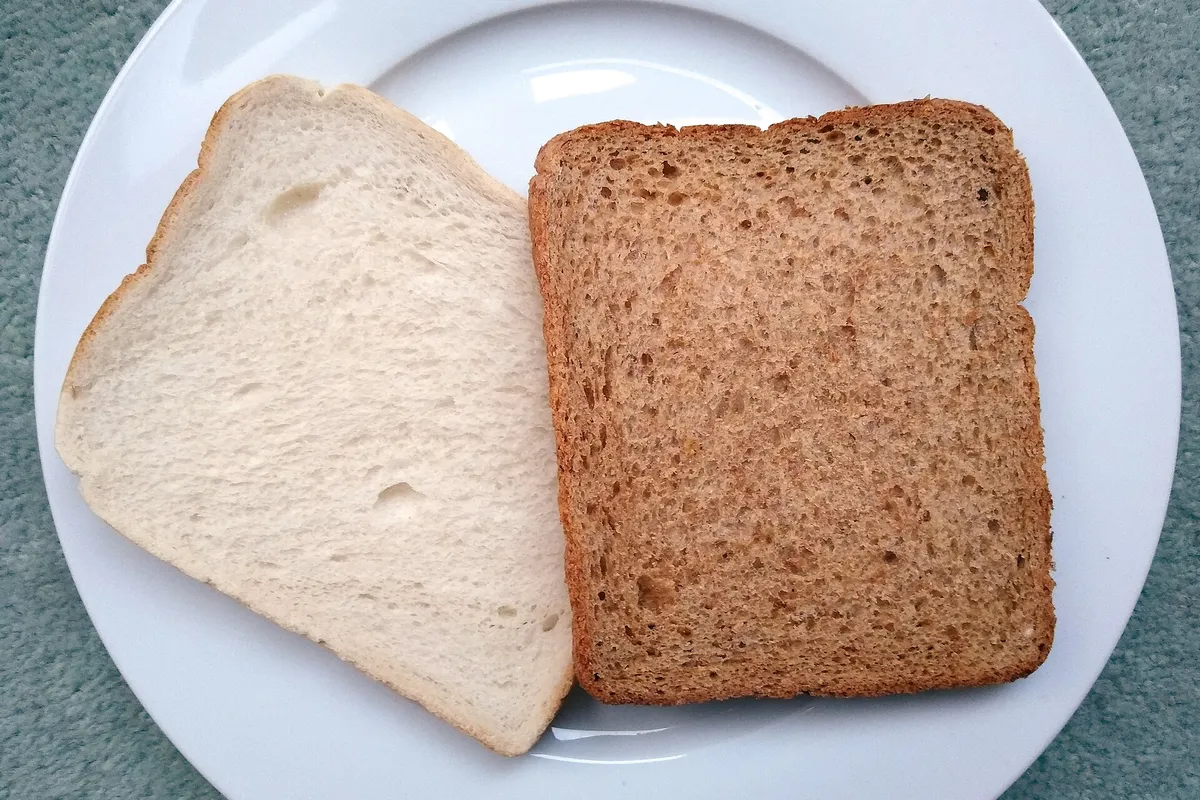
- Swap white for wholemeal. Wholemeal bread, brown rice and wholewheat pasta contain far more magnesium than white versions, because much of it is in the bran.
- Sprinkle seeds. Ground pumpkin or sunflower seeds stir easily into porridge, yoghurt or pancake batter.
- Hide the greens. Blend spinach into pasta sauce or a fruit smoothie.
- Add beans. Baked beans, black beans in a wrap or chickpeas in a curry all count.
- For family meals that do this without a fight, try our easy recipes for kids.

How to choose a magnesium gummy for your child
If you and your GP or pharmacist decide a gummy makes sense, these five checks take about a minute in the shop:
Food supplements in the UK are regulated as foods, not medicines. They don’t need approval before they go on sale, and they must not claim to prevent or cure illness. The Food Standards Agency covers the rules, and the MHRA steps in if a product makes medicinal claims. That’s why it pays to read labels carefully.

Magnesium gummy safety checklist
If you’re hoping a gummy will help with bedtime, a calm, predictable routine usually does more. A short story at lights out is a good start: try our 5 minute bedtime stories.
More on feeding and health from Kids Magazines
- What magnesium does and the best food sources: magnesium for kids.
- Meals children actually eat: easy recipes for kids.
- Starting solids and first foods: our baby food chart.
- Another label question parents ask: can 2-year-olds drink Ensure?
Magnesium gummies for kids: your questions answered
Are magnesium gummies safe for kids?
Gummies made for children and sold by UK retailers are generally safe when you give the amount on the pack and no more. The EU upper limit for magnesium from supplements is 250mg a day from age 4; no limit has been set for 1 to 3 year olds. Too much causes diarrhoea and tummy pain. Children with kidney problems, or who take regular medicines, should only take magnesium if their doctor agrees.
How much magnesium does a child need a day in the UK?
The UK reference nutrient intake is 85mg a day for children aged 1 to 3, 120mg at 4 to 6, 200mg at 7 to 10, 280mg at 11 to 14 and 300mg at 15 to 18. These are amounts from food and drink, and most children under 11 already reach them.
What age can children have magnesium gummies?
Most UK children’s magnesium gummies say 3 years and over, and Natural Vitality CALM Kids says 4 and over. Gummies are a choking risk for younger children. If you think a toddler needs magnesium, ask your GP or health visitor first.
Do magnesium gummies help children sleep?
There is no authorised health claim in the UK that magnesium helps sleep, which is why packs say things like “contributes to normal psychological function” instead. Good-quality studies in healthy children are lacking. A steady bedtime routine is better supported. If your child regularly struggles to sleep, talk to your GP.
Can my child take magnesium and a multivitamin together?
Sometimes, but check the labels first. Add up the magnesium in both and keep the total from supplements within the label directions. Watch out for vitamin D too: some magnesium gummies, such as Boots Kids Magnesium, also contain 10µg of vitamin D, the same as many children’s vitamin drops.
What happens if a child eats too many magnesium gummies?
The most likely effect is diarrhoea, stomach cramps or feeling sick. Keep the bottle and call NHS 111, or your GP, for advice on what to do. If your child is very drowsy, floppy or struggling to breathe, call 999. Store gummies out of reach, because children see them as sweets.
Is magnesium citrate or glycinate better for kids?
Most UK children’s gummies use magnesium citrate, which the body absorbs well. Glycinate is common in adult products. For a child, the amount of elemental magnesium and the age on the pack matter more than the form.
Sources: Department of Health (1991), Dietary Reference Values for Food Energy and Nutrients for the United Kingdom, via British Nutrition Foundation, “Nutrition Requirements” (2021); EFSA, “Overview on Tolerable Upper Intake Levels as derived by the Scientific Committee on Food and the EFSA NDA Panel”, summary tables (magnesium: SCF 2001); British Nutrition Foundation (2020), NDNS Years 9 to 11 summary; NHS, “Vitamins and minerals: others” (magnesium) and “Vitamins for children”; USDA FoodData Central via NIH Office of Dietary Supplements, Magnesium fact sheet; GB Nutrition and Health Claims Register; product details from Tesco, Boots, Holland & Barrett, LloydsPharmacy and Ocado listings, November 2026. Featured photo: Suzanne Schroeter, Wikimedia Commons, CC BY-SA 2.0. This article is general information, not medical advice.